AutoCAD Civil 3D: Advanced

CAD - AutoDesk

Participants will learn about the advanced features of AutoCAD Civil 3D. Since the application of Civil 3D varies depending on the situation, we ask that you briefly describe your learning objective or reason for participating in the “Comments” field when registering. This will help us ensure that the course is tailored to your needs.

Course duration: 2 days
4
3

Taught by:

Externe Docent

Introduction to Civil Engineering Design

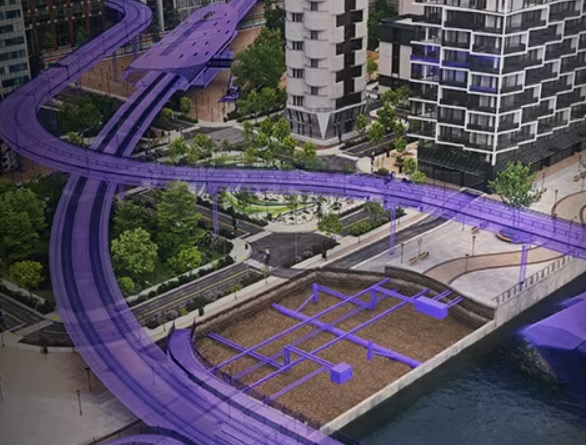
Geo-ICT Training Center, Nederland - cursus AutoCAD Civil 3D BasisIn the world of civil engineering design and construction, 3D modeling plays a crucial role. It enables engineers and designers to not only visualize but also analyze complex infrastructures before the first shovel hits the ground. These techniques, particularly using AutoCAD Civil 3D, provide a dynamic environment in which both design details and required materials can be accurately predicted and managed.

By utilizing the advanced capabilities of AutoCAD Civil 3D, such as generating dynamic reports, analytical models, and cross-sections, professionals in geoinformation technology can work more efficiently. It enables the integration of existing geodata and design information. This makes it possible to make more informed decisions and optimize project execution. These advanced techniques are not only a leap forward in design and planning but also increase accuracy, reduce costs, and accelerate project delivery.

Mastering these technologies requires in-depth knowledge and skills, which you can develop by enrolling in our AutoCAD Civil 3D Advanced Course. Led by experienced professionals, this course immerses you in practical applications. It shows you how to take your civil engineering projects to the next level with AutoCAD Civil 3D.

Haven’t worked with AutoCAD Civil 3D before? Then take our AutoCAD Civil 3D Fundamentals course.

The Importance of 3D Modeling in Civil Engineering

3D modeling has revolutionized civil engineering. It enables professionals to visualize, analyze, and optimize complex infrastructures like never before. With tools such as AutoCAD Civil 3D, you can seamlessly integrate geodata and design information. This significantly improves project efficiency. It enables you to simulate realistic scenarios and support better decision-making processes by providing insights into how projects respond to various variables. This methodology not only improves accuracy and cost efficiency but also accelerates project delivery. This creates significant value for both clients and stakeholders. Learning to master these advanced 3D modeling techniques through our course provides indispensable skills for any civil engineering professional striving for innovation and excellence in their field.

The Evolution of CAD Software in Civil Engineering Projects

The rise of CAD (Computer-Aided Design) software has fundamentally changed the way civil engineering projects are designed and executed. What began with simple drafting programs has evolved into advanced 3D modeling platforms. Take AutoCAD Civil 3D, for example, which not only speeds up drafting but also brings unprecedented accuracy and flexibility to the design process. This evolution has enabled civil engineers to create more complex designs while minimizing project risks. Through the integration of geodata and real-time analysis, CAD software now offers capabilities that were previously unimaginable. As a result, projects can be completed faster, more cost-effectively, and with less environmental impact.

What You Will Learn in the AutoCAD Civil 3D Advanced Course

Advanced Features of AutoCAD Civil 3D

AutoCAD Civil 3D is a powerful tool for civil engineering design, offering advanced capabilities for 3D modeling, dynamic reporting, and geodata analysis. This software helps you plan, design, and manage civil engineering projects more efficiently by integrating real-time data and advanced analytics. You will learn to work with complex modeling techniques, generate accurate quantities and cost estimates, and discover how dynamic reporting enables you to adapt projects without wasting valuable time. These skills are essential for any professional committed to innovation and precision in civil engineering design.

Practical Applications of 3D Models in Civil Engineering Design

The use of 3D models in civil engineering design is revolutionary and has significantly improved project effectiveness. These models not only provide a visual representation of projects but also enable designers to create and analyze more complex structures, from road construction to water management. Realistic simulations allow potential problems to be identified and resolved early on, thereby increasing the durability and safety of structures. Furthermore, the integration of geodata and dynamic reporting enables seamless collaboration between different teams, which is essential for the success of large-scale projects.

Why choose our Advanced AutoCAD Civil 3D Course?

Choosing the AutoCAD Civil 3D Advanced course at Geo-ICT means investing in a learning experience that is both practical and in-depth. Here are a few reasons:

  • Expert Instructors: Professionals with extensive hands-on experience provide relevant and applicable knowledge.
  • Personal Attention: Small class sizes ensure you get the attention you deserve.
  • Practical Approach: Hands-on exercises and project work encourage learning by doing.

This course not only provides an in-depth exploration of the advanced features of AutoCAD Civil 3D but also prepares you for the realities of civil engineering projects, equipping you with skills that are immediately applicable in your work.

Read more

Enroll

€995,- (VAT included)
  • Course duration: 2 days
Register for this course

Dagindeling

Day 1

During the AutoCAD Civil 3D Advanced course, you will gain insight into the structure and the various settings required to work with 3D models as efficiently as possible.

You will learn this through practical exercises. On this first day, we will cover:

  • Basic settings
  • Working with basic data and models
  • Working with codes within models

Day 2

On this second day, participants will practice:

  • Generating models based on profile curves;
  • Generating cross-sections;
  • Generating quantities;
  • Reports based on models;
  • Using cross-sections;
  • Working with reports and generating them dynamically.
Course duration: 2 dagen
Sign me up

Leerdoelen

  • Create a new design based on an existing situation;
  • Using different models;
  • Use cross-sections;
  • Working with reports and generating them dynamically.
  • Upon completion of the AutoCAD Civil 3D Advanced course, the participant will be able to independently handle civil engineering projects in a 3D environment, generating models, quantities, and reports directly from AutoCAD Civil 3D.

Trainers

ED

Externe Docent

Verschillende cursussen
4.4
265 beoordelingen

Anoniem

2 years geleden
Bekijk alle reviews

Want to know more?

Do you have questions about the course content? Or are you unsure whether the course aligns with your learning goals or preferences? Would you prefer an in-house or private course? We’d be happy to help.

Frequently Asked Questions About AutoCAD Civil 3D Advanced

In this course, you will learn advanced civil engineering design techniques using AutoCAD Civil 3D, including working with 3D models and dynamic reporting.

This course is designed for professionals who already have experience with AutoCAD Civil 3D and want to expand their skills. We recommend that beginners take the introductory course first.

The course lasts two days and costs €995, excluding VAT.

Yes, upon successful completion of the course, you will receive a certified certificate of completion.

The course focuses on creating a new design based on an existing situation, using various models and cross-sections, and dynamically generating reports.

The course lasts two days. Day 1 focuses on basic settings, working with basic data and models, and coding within models.

Yes, the course includes practical exercises designed to help you understand the structure and settings of 3D models.

Yes, after the course, you can still ask questions via email for two weeks, and there is also the option of online support with personalized one-on-one lessons.