
The Artificial Intelligence Fundamentals course provides a solid foundation in what AI is and how to apply it.
Artificial Intelligence for Users
The Artificial Intelligence Fundamentals course provides a solid foundation in what AI is and how to apply it.
Artificial Intelligence (AI) is a fascinating and rapidly growing technology that is fundamentally changing the way we live, work, and play. At its core, AI refers to the simulation of human intelligence in machines designed to think and learn like humans. This technology, once confined to the realm of science fiction, is now an integral part of our daily lives, from advanced search engines and personal assistants to automated data analysis and predictive modeling.
In the world of geoinformation and geodata, AI plays a crucial role in analyzing satellite imagery and generating insights that aid in urban planning, environmental protection, and disaster management.
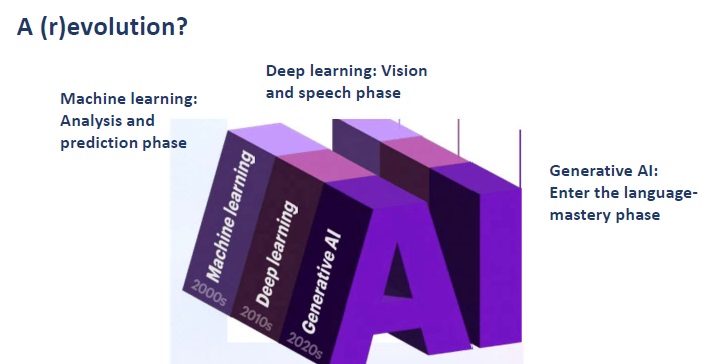
One of the most exciting aspects of AI is the potential for self-learning systems. These systems, powered by machine learning and deep learning technologies, can recognize patterns, learn from experience, and improve their performance over time without human intervention. This opens up new possibilities for automation and efficiency improvements in nearly every domain of human activity.
Despite its many benefits, AI also raises ethical and societal issues. Issues such as privacy, security, and the impact on the labor market require careful consideration and responsible management. It is essential that we develop and use this technology in a way that benefits society while minimizing risks.
The future of AI is undoubtedly promising, with endless possibilities for further development and application. It is a key driver of the Fourth Industrial Revolution, which will continue to transform the way we live and work. For anyone interested in the cutting edge of technological innovation, AI offers an exciting and dynamic field to explore, full of opportunities to help shape our future.
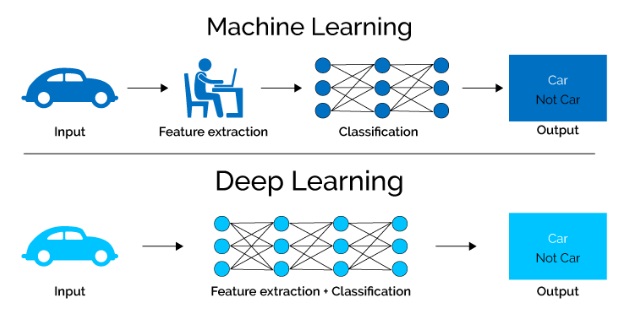
One of the most exciting areas within AI is machine learning (ML). This is a subset of AI that gives computers the ability to learn and evolve based on new information. At the heart of machine learning lies deep learning, a technique that simulates networks resembling the human brain. This enables machines to recognize complex patterns in large datasets.
AI has a significant impact on the world of geoinformation and geodata. It is used to analyze vast amounts of data and generate insights that are crucial for decision-making across a wide range of applications—from urban planning and environmental management to navigation and logistics.
Understanding AI and its potential is essential in today’s technology-driven society. By learning the principles of AI, you open the door to unprecedented opportunities for innovation and improvement in nearly every field of human endeavor. It is a key component in the ongoing quest for knowledge, efficiency, and progress.
The journey of Artificial Intelligence (AI) through time is nothing short of a fascinating adventure. Starting from pure scientific fantasy, it has evolved into one of the most influential technologies of the 21st century.
Throughout the history of AI, there have been several key moments that have shaped its development:
The history of AI teaches us about the importance of patience, perseverance, and above all, the unlimited possibilities that arise when human creativity combines with technological progress.
In this section, we dive into the building blocks that make AI such an influential force in modern technology. These concepts form the backbone of AI and give us insight into how machines can learn, reason, and act in ways that mimic human intelligence.
In addition to these technical foundations, there are also some essential concepts that are important for understanding AI:
In the field of geoinformation and geodata, these core concepts and fundamentals are particularly relevant. AI helps analyze spatial data, improve map accuracy, and predict geographic trends. By applying AI, we can make better decisions in urban planning, environmental management, and disaster response.
Artificial Intelligence has a wide range of applications that influence our daily lives, ranging from simple tasks to complex decision-making processes. Here are some real-world examples where AI has a significant impact:
These examples illustrate only a fraction of the potential that AI offers. What is truly exciting is the speed at which new applications are being developed and introduced. As we continue to explore and integrate these technologies, we are opening the door to unprecedented possibilities that can transform the way we live, work, and interact with the world around us.
In the world of Artificial Intelligence (AI), developing skills and the ability to solve problems is essential. Mastering core skills makes a difference in how effectively AI solutions are implemented and used. Here are some key skills and strategies:
Applying AI to solve problems requires a multidisciplinary approach, combining domain-specific knowledge with technical expertise and creative thinking. In the context of geoinformation, for example, developing AI systems that perform advanced analyses on geospatial data can help predict climate change, optimize urban planning, and improve emergency response strategies.
Our Basic Artificial Intelligence Course at Geo-ICT offers unique advantages that set it apart:
By choosing our course, you’re investing in a program that not only equips you with technical expertise but also prepares you to think and act innovatively in the AI industry. With a special focus on geospatial data, we’ll empower you to tackle tomorrow’s challenges and be a pioneer in the application of AI.
On the first day, the following topics will be covered:
On the second day, the following topics will be covered:
On the third and final day, the following topics will be covered:

Do you have questions about the course content? Or are you unsure whether the course aligns with your learning goals or preferences? Would you prefer an in-house or private course? We’d be happy to help.
In this course, you will receive a thorough introduction to AI, including the basics, applications, and ethical issues.
The course covers the fundamental principles of AI, including algorithms, data analysis, and deep learning.
You will learn about practical applications of AI in various business sectors and how to solve AI-related problems.
We will discuss the ethical considerations and risks associated with AI, and how to develop reliable AI systems.
Yes, upon successful completion, you will receive an AI certificate recognized by the Dutch AI Coalition.
The course lasts 3 days and costs €1,695, excluding VAT.
In this course, we explain the difference between AI and machine learning, including approaches and applications such as robotics.
We explore future trends and developments in AI, and how they will impact the industry.
