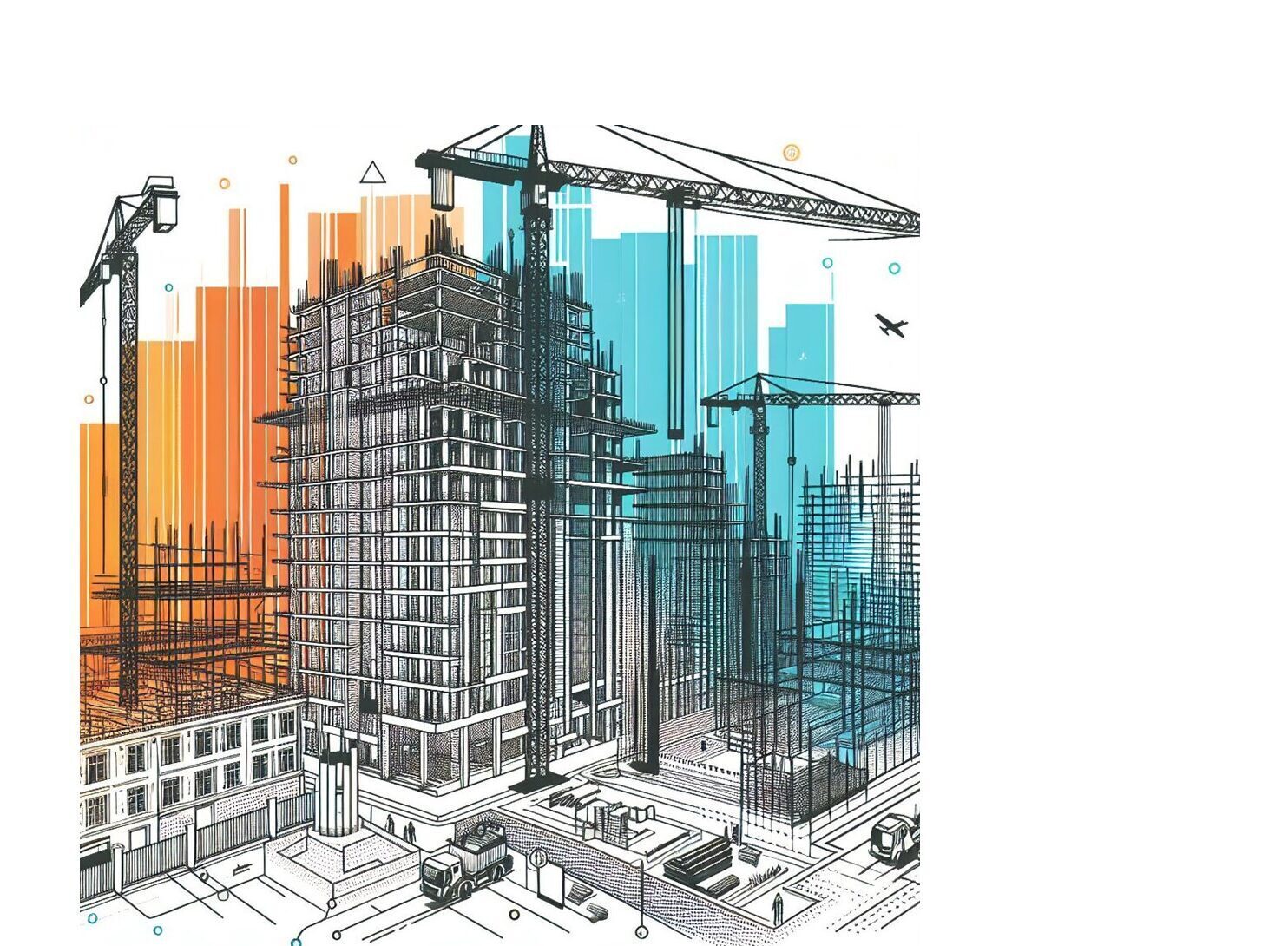
Geo-ICT offers a diverse range of construction courses designed to meet the needs of every professional in the world of geoinformation and GIS. Whether you’re new to the industry or looking to deepen your skills, we have the perfect course for you. Take, for example, our GPS in Construction course, which is ideal for professionals who want to use accurate geodata for construction surveying. For a broad introduction to the construction sector, our Construction Course provides a solid foundation in both theory and practice. And for those interested in the design aspect, our Revit Introduction for Contractors course is a must, where you’ll learn how to digitally design construction projects using GIS technologies. These courses are not only interconnected by their focus on the application of geoinformation in construction, but also by their goal of providing you with practical and immediately applicable knowledge. This way, we prepare you to make a real impact in your work.
The Evolution of Construction Techniques and Materials
The construction sector has undergone a significant transformation, partly thanks to advances in geoinformation and GIS technologies. These technological developments have not only increased efficiency but also opened up new possibilities for planning, designing, and managing construction projects. Let’s dive into how this evolution has influenced construction techniques and materials.
First, with GIS, engineers and construction professionals can visualize and analyze complex datasets, which is crucial for the accurate planning and execution of construction projects. The use of GIS in construction offers several advantages:
- Cost savings: Accurate location data helps prevent costly errors.
- Planning efficiency: It eliminates the need to manually draw extensive structures, improving communication within teams and ensuring accurate project documentation.
- Environmental impact assessment: GIS helps analyze the environmental impact of construction projects by combining different data layers, such as historical data and future growth plans.
The integration of GIS with other technologies such as CAD has further opened the door to more advanced data management and visualization. This enables construction teams to view live GIS maps and seamlessly integrate GIS data structures into their CAD designs, thereby improving the accuracy and accessibility of project data.
However, despite these benefits, there are challenges and limitations associated with the adoption of GIS in the construction sector. One of the biggest hurdles is the high cost associated with the complex interaction of various GIS components, including the need for specialized staff training.
Nevertheless, the benefits often outweigh the costs. The ability to analyze water management systems, optimize traffic flows, and thoroughly evaluate environmental impact are just a few examples of how GIS is taking the construction sector to the next level. These technological advancements enable more sustainable, efficient, and cost-effective construction practices.
In conclusion, the evolution of construction techniques and materials, driven by advances in geoinformation and GIS, marks a new era in the construction sector. While there are challenges, the potential of these technologies is undeniable, paving the way for more innovative and sustainable construction projects.
GPS in the Modern Construction Industry
In the modern construction sector, GPS technology has revolutionized the way projects are planned, executed, and managed. This powerful tool offers unprecedented precision that is essential for the complexity and scale of today’s construction projects. But why is GPS so crucial in this sector? Let’s look at some key points:
- Improved precision in surveying: GPS technology enables fast and accurate surveying, essential for the correct positioning of construction projects.
- Efficiency in project management: With GPS, project managers can receive real-time data on a project’s progress, which helps streamline the workflow and reduce downtime.
- Cost savings: Thanks to the accuracy and efficiency offered by GPS, construction companies can achieve significant cost savings. Fewer errors mean less time and material wasted.
- Construction site safety: GPS helps accurately plan the deployment of heavy machinery, which improves safety on the construction site.
Integrating geoinformation and GPS into construction projects goes beyond mere technical benefits. It contributes to more sustainable construction practices through better resource management and minimization of environmental impact. This demonstrates the value of having a deep understanding of geoinformation technologies and their application in construction.
The Role of Technology in Modern Construction
In the world of construction, technology has taken on a central role, particularly in the field of geoinformation and GIS. This digital era has led to revolutionary changes in how projects are planned, executed, and managed. Let’s dive into how these technological advancements are transforming the construction industry.
One of the most influential innovations is the use of Building Information Modeling (BIM). BIM enables us to create detailed digital representations of a facility’s physical and functional characteristics. This is not only crucial during the design phase but also aids in managing buildings throughout their entire lifecycle. Particularly relevant for geoinformation, BIM facilitates the integration of geodata into construction planning, leading to more accurate and efficient project execution.
The role of big data and predictive analytics cannot be ignored either. By analyzing historical data and patterns, professionals in the construction sector can predict future trends and potential challenges. Imagine being able to anticipate delays by analyzing weather data and work schedules, and taking proactive steps to minimize them. These kinds of insights, made possible by big data, greatly enhance decision-making and operational efficiency.
- Drones are a game-changer in the construction industry, especially when it comes to collecting geodata. These aerial technologies offer a new perspective on construction projects by providing detailed aerial photos and videos, giving construction teams a more accurate picture of their projects. Drones help monitor progress, conduct land surveys, and even inspect hard-to-reach locations.
In addition to these tools, innovative materials are transforming the construction industry. From self-healing concrete that automatically repairs small cracks to the use of recycled materials, these developments contribute to more sustainable construction practices. Furthermore, the rise of 3D printing in construction makes it possible to realize complex designs and structures that were previously unimaginable, opening up new possibilities for customization and innovation.
Integrating these technologies into construction practice offers countless benefits, such as increased efficiency, improved safety, and a lower environmental impact. GIS and geoinformation play a key role in this by providing accurate location data that is essential for the planning, design, and management of construction projects. These technological advancements are not only a means to improve the way we build, but also to shape the future of the construction sector—a future centered on digital innovation.