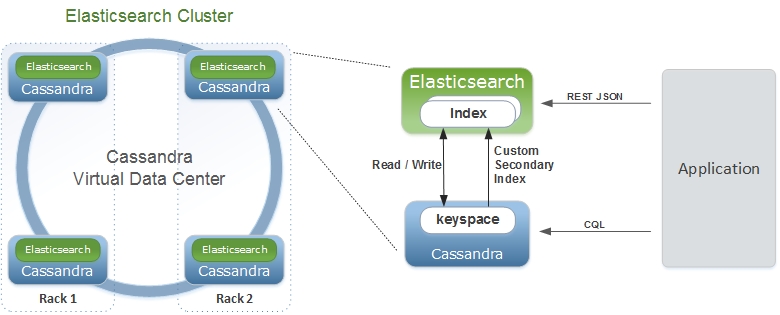
Elasticsearch isn’t limited to searching textual content; it excels at handling all kinds of data, including geographic data, structured data, and unstructured data.
In the context of Geo-ICT, Elasticsearch plays a crucial role in enabling fast and accurate access to geographic information. By implementing Elasticsearch, professionals in the geoinformation sector can work more efficiently, with better access to the data they need to make informed decisions.
The Power of Search Engines in Data Analysis
In the world of geoinformation and geodata, the emergence of advanced search engines like Elasticsearch has radically transformed the way we analyze data. These search engines not only enable the rapid searching of vast amounts of data but also allow for complex data analyses essential for uncovering deep insights and patterns. Integrating Elasticsearch into your data ecosystem can deliver significant benefits. This unlocks the following capabilities:
- Speed and Efficiency: With Elasticsearch, you can obtain results within milliseconds—even when working with petabytes of data.
- Flexibility in Data Analysis:
- Discovering Patterns and Trends: Elasticsearch facilitates in-depth analysis to identify hidden patterns and trends in geodata.
- Advanced Queries and Aggregations: It enables users to execute complex queries and aggregate data in ways that traditional databases cannot.
- Scalability and Reliability: One of the biggest advantages of Elasticsearch is its ability to scale. You can start with a small dataset and seamlessly scale up to billions of records without compromising performance.
- Improved Decision-Making: With the power to quickly find and analyze relevant data, organizations can make better-informed decisions.
Elasticsearch is transforming the way organizations use analytics to make strategic decisions. By gaining deeper insights into their data, companies can develop innovative solutions, improve efficiency, and gain a competitive advantage in their respective fields. Additionally, Elasticsearch offers a rich set of tools and plugins that go beyond mere search and analysis.
Adopting Elasticsearch within your organization or project can fundamentally change the way you work with data, through more efficient access to information and more powerful data analysis capabilities.
Core Features and Applications of Elasticsearch
Elasticsearch is known for its impressive range of core functionalities, making it an indispensable tool for any professional working with geospatial information and geodata. Here are some of the key features that make Elasticsearch so powerful:
- Real-time Search: Elasticsearch enables users to search data within milliseconds. This gives users immediate access to the information they need.
- Distribution and Scalability: It is designed to scale horizontally, meaning it grows effortlessly with your data. You can easily add additional servers to increase capacity without downtime.
- Advanced Analysis: With Elasticsearch, you can perform complex data analyses and aggregations. This makes it easy to extract in-depth insights from your data.
The applications of Elasticsearch are as diverse as the data itself. Here are some specific use cases where Elasticsearch excels:
- Geographic Data Analysis and Visualization: For professionals working with geodata, Elasticsearch offers powerful geospatial features that help analyze and visualize geographic information.
- Log File and Performance Analysis: It is ideally suited for searching and analyzing log files. This makes it an essential tool for IT professionals who monitor system performance.
- E-commerce Search Features: Elasticsearch is widely used in the e-commerce sector to help customers quickly find products through powerful search features.
Thanks to its flexibility, scalability, and versatility, Elasticsearch is more than just a search engine. It is a complete platform capable of meeting a wide range of data-related needs. By integrating Elasticsearch into your data strategy, you can unlock the full potential of your data and elevate decision-making within your organization to a higher level.
What You’ll Learn in the Elasticsearch Search Engine Course
From Basic to Advanced Features
Elasticsearch is a tool that stands out for its wide range of features. At its core, Elasticsearch offers user-friendliness and accessibility, while advanced features enable in-depth analysis and customized solutions. Below is an overview of how you can grow in your use of Elasticsearch:
- Basic Features:
- Fast and Efficient Data Indexing: Enables you to index your data quickly, making it immediately searchable.
- Simple Search Queries: Supports basic search queries that help users find the information they need without delay.
- Transition to Advanced Features:
- More Complex Search Queries: Users can transition to more complex search queries using Elasticsearch’s rich query language. This allows them to target specific datasets with greater precision.
- Data Aggregation: For in-depth data analysis, Elasticsearch offers powerful aggregation functions. These allow you to create summaries of your datasets and gain insights that would otherwise remain hidden.
The beauty of Elasticsearch is that the platform grows with you. If you’re just getting started with geospatial data, you’ll find the accessibility and simplicity of the basic features particularly inviting. As you become more familiar with the system and your needs grow more complex, Elasticsearch unlocks a world of advanced features. These allow you to manipulate and analyze your data in unprecedented ways.
For organizations striving to maximize the value of their geodata, Elasticsearch offers not only the tools needed for initial data analysis but also for developing advanced analytical models. Thanks to the combination of ease of use and advanced capabilities, Elasticsearch is the perfect partner for anyone involved in processing and analyzing large volumes of data.
Setting Up and Managing Clusters
Setting up and managing clusters is a fundamental aspect of working with Elasticsearch, especially when it comes to scaling your data analysis and search queries. Elasticsearch clusters offer the flexibility and scalability needed to process large volumes of geospatial information and geodata. Here’s how to effectively set up and manage clusters so you can fully leverage the power of Elasticsearch:
- Understand the Basics of Clustering: An Elasticsearch cluster consists of multiple nodes that work together as a single system. This allows data to be distributed across multiple servers, ensuring high availability and scalability.
- Cluster Configuration: Properly configuring your cluster is crucial for optimal performance. This includes:
- Node Identification: Each node in a cluster must be correctly identified and configured to effectively fulfill its role within the cluster.
- Data Balancing: Ensure that data is evenly distributed across all nodes to prevent "hotspots" and minimize load times.
- Health Checks: Regularly monitoring the health of your cluster can help identify and resolve issues early on.
- Scalability and Elasticity: One of the biggest advantages of Elasticsearch is its ability to scale dynamically. You can easily add or remove nodes from your cluster to meet your organization’s changing needs.
- Security Measures: Securing your cluster is essential to ensure that only authorized users have access to your data. Implement security measures such as authentication, authorization, and encryption to protect your data.
Elasticsearch clusters offer a powerful way to process, analyze, and search large datasets. By effectively setting up and managing these clusters, you can harness the full potential of Elasticsearch. This results in faster insights and decision-making within your organization.
Analyzing and Optimizing Data
At the core of Elasticsearch lies the ability not only to efficiently manage geoinformation and geodata, but also to analyze this data in depth and optimize it for various applications. Elasticsearch offers a range of tools and features to analyze and optimize your data. Here are some ways you can approach these processes:
- In-Depth Data Analysis: Elasticsearch uses complex algorithms and query languages to perform detailed analyses. You can:
- Run aggregations and analytical queries to identify trends, patterns, and anomalies in your data.
- Apply advanced text search to search through millions of documents for specific information, using features such as full-text search, phrase search, and highlighted search.
- Data Optimization: To refine and improve the accessibility and performance of your data, Elasticsearch offers various optimization methods:
- Indexing: By intelligently indexing your data, you can significantly improve search performance.
- Sharding and Replication: Distribute your data across multiple shards to balance the load and set up replication for higher availability and fault tolerance.
An effective data strategy involves not only collecting and storing data, but also continuously analyzing and optimizing this data to extract maximum value. Elasticsearch plays a crucial role in this by:
- Real-Time Insights: Providing the ability to derive real-time insights from your data. This is essential in rapidly changing environments such as financial markets, social media trends, and emergency response.
- Data Visualization: Through integration with tools like Kibana, you can visualize your analysis. This simplifies the interpretation and communication of insights.
Using Elasticsearch to analyze and optimize your geodata not only enables you to work more efficiently. It also opens up new opportunities for innovation and development within your organization.
Why Choose Our Elasticsearch Course?
Choosing the right course to learn and master Elasticsearch can be a challenge, given the complexity and technical nature of the subject. However, our Elasticsearch Search Engine course stands out thanks to a unique combination of in-depth expertise, a hands-on approach, and a commitment to the success of every participant. Here are a few reasons why our course is the ideal choice for professionals looking to deepen their skills in geospatial information and geodata analysis:
- Expert Instructors: Our course is led by experienced instructors who are not only experts in Elasticsearch but also have a rich background in geoinformation. They bring valuable real-world experiences and insights to the classroom, allowing you to learn from the best in the field.
- Practical Learning Experience:
- We strongly believe in learning by doing. Our course includes hands-on exercises and projects that make your knowledge immediately applicable to real-world scenarios.
- You won’t just learn the theory behind Elasticsearch. You’ll also learn how to effectively implement and use it to solve complex data analysis challenges.
- Small Class Sizes: We keep our class sizes small to ensure personal attention and an optimal learning experience for every participant. This means you’ll receive the support and guidance you need to succeed.
- Certification: At the end of the course, you’ll receive a certificate of completion that recognizes your knowledge and skills in Elasticsearch. This certificate is a valuable addition to your professional portfolio, allowing you to demonstrate your expertise.
Choosing our course means investing in your professional development with a program designed to provide you not only with the technical knowledge you need, but also the practical skills to apply this knowledge in your daily work.