
The work includes conducting soil surveys, as well as preparing and carrying out fieldwork.
The work includes conducting soil surveys, as well as preparing and carrying out fieldwork.
As a Soil Field Technician, you are an essential link in the research into the quality of our soil. Your work is diverse and challenges you every day to apply your knowledge and skills in practice. You often start your day in the field, where you collect various measurements and soil samples. You don’t do this alone; you work with a team of specialists to ensure the highest level of accuracy.
In your work, you use advanced equipment to map the composition and contamination of the soil. Your efforts not only help assess the current state of our soil but also play a crucial role in the protection and sustainable development of our environment. Your findings can lead to important decisions regarding the environment and land use planning. As a Soil Field Worker, you have a job that truly matters; you contribute to a healthier planet and a better future for everyone.
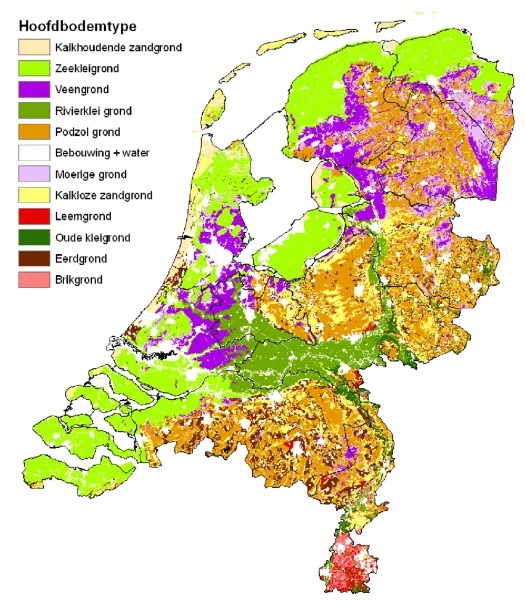
The work of a Soil Field Officer is crucial for our environment and public health. This work forms the basis for many policy decisions and strategic plans regarding land use and the environment. Through your efforts, important data is collected that is indispensable for:
Every day, you dedicate yourself to protecting the earth we live on. Without your expert analyses, the impact of certain industrial activities on the soil would be much less clear. Soil Field Workers like you ensure that our precious natural resources are managed responsibly. This makes your role not only important but also an example of how one person can make a big difference in the world.
Geo-information is indispensable in the work of a Soil Field Technician. This technology provides accurate and essential data that helps you perform your work effectively and efficiently. The influence of geo-information manifests itself in several key ways:
By using advanced geoinformation systems, you can efficiently select your study areas and focus on zones that may pose risks to the environment or public health. In this way, geoinformation not only supports your daily work but also enhances the accuracy of your findings, ultimately leading to better-informed decisions and recommendations. This makes geoinformation a powerful tool that directly contributes to the impact of your work as a Soil Field Technician.

Do you have questions about the course content? Or are you unsure whether the course aligns with your learning goals or preferences? Would you prefer an in-house or private course? We’d be happy to help.
In addition to essential CAD and GIS courses, a Soil Field Worker has completed specific training programs that are crucial to the role, such as the Soil Investigation Course. This program provides the necessary knowledge to effectively manage and analyze up-to-date, reliable, and comprehensive soil data.
Collecting and maintaining soil data is a strategic activity that is essential for making informed decisions. At the Geo-ICT Training Center in the Netherlands, soil field workers are trained to perform these important tasks. After completing their training, they are often deployed to leading clients such as Mateboer, AnteaGroup, Lycens, and Aveco De Bondt.
These training programs ensure that the Soil Field Worker possesses all the necessary skills to excel both in the field and in analytical roles.
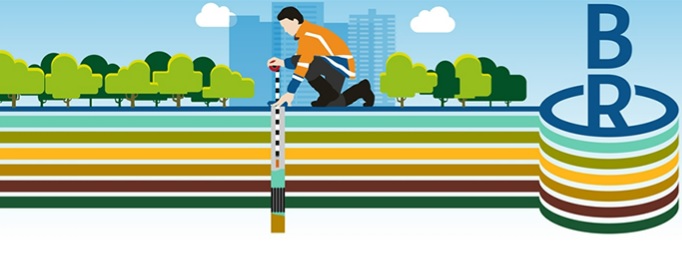
As a Soil Field Technician, you have a number of crucial responsibilities that are essential for understanding soil quality and composition. Below are some of the most important tasks:
These tasks require in-depth knowledge of geoinformation and geodata, and enable you to make a significant contribution to environmental research and management.
A Soil Field Technician is responsible for conducting field research on soil and groundwater quality. You will collect soil and water samples, take measurements on-site, and, in a hybrid role as a soil consultant, collaborate with specialists to analyze and report on data.
This role is crucial because reliable soil data is essential for environmental protection, land-use planning, and safety. Thanks to your work, contaminated sites can be identified and sustainable decisions can be made.
In Geo-ICT, you combine fieldwork with geoinformation: you use location data, historical soil data, and advanced tools to conduct analyses. This makes the role more versatile than purely traditional fieldwork.
Key skills include:
Your day might look like this:
Yes, Geo-ICT offers programs that train you for this role so you can start working right away. Check out the Geo-ICT Traineeship job posting
You can advance to roles such as Senior Field Technician, Soil Investigation Project Manager, and/or Soil & Environment Consultant. Additional expertise in geoinformation or BRL certifications will expand your career opportunities.
Although you can already accomplish a great deal with field skills, knowledge of geoinformation (such as positioning, maps, and historical data) gives you a clear competitive edge in this role at Geo-ICT.
You can apply directly for the Geo-ICT traineeship or contact us via the widget on the page by entering your name, email address, and phone number to schedule a no-obligation consultation. You can also send us a WhatsApp message. If you have any questions about the program or whether the position is a good fit for you, please feel free to contact us.
