Interested in taking a GeoDefense course or training program?

What is GeoDefense, and why is it essential?

GeoDefense Courses

GeoDefense is a strategic application of geographic information within defense and security operations. It uses geo-information and GIS (Geographic Information Systems) to gain a better understanding of the operational terrain, infrastructure, and potential threats. By analyzing geographic data, defense organizations can assess situations more quickly and make better-informed decisions in complex environments.

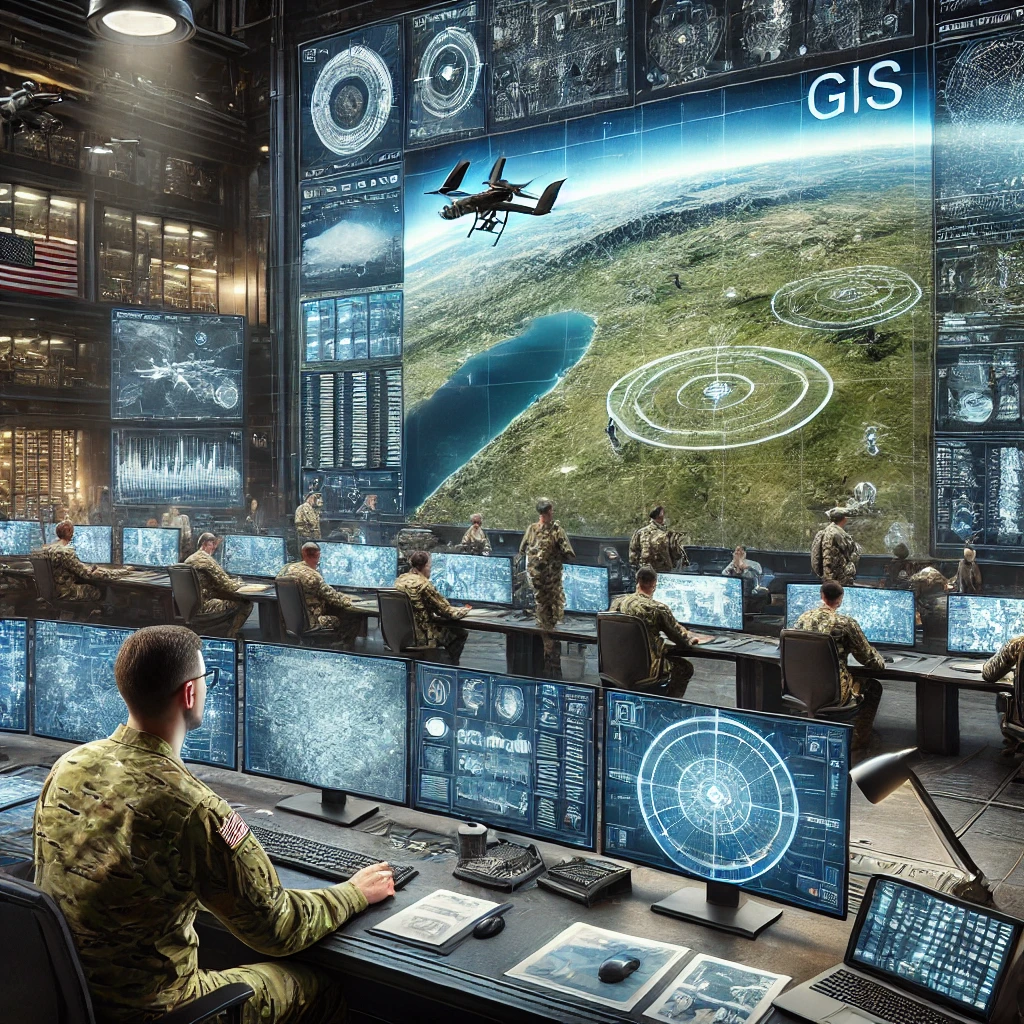
Using satellite imagery, sensor data, drone observations, and other geospatial data sources, a detailed picture of the area of operations is created. This location intelligence supports mission planning, terrain analysis, and situational awareness, among other things. By presenting information visually and spatially, commanders and analysts can recognize patterns more quickly and better assess risks.

The application of GeoDefense enables organizations to conduct information-driven operations and respond more quickly to changing conditions in the field. This makes operations more efficient, safer, and better aligned with the geographical reality of the operational area.

“`

Classroom instruction at Geo-ICT

Why choose a GIS and Defense course at Geo-ICT?

If you’re interested in the role of geoinformation in defense and security operations, taking a course or training program at Geo-ICT is a valuable step. Our courses are designed to give you insight not only into the theoretical foundations of GeoDefense and geospatial analysis, but also into the practical applications used in operational environments.

Whether you’re new to the world of GIS or want to deepen your existing knowledge, you’ll find a course with us that matches your skill level and ambitions. During the training sessions, we work with realistic scenarios and practical examples involving geodata, terrain analysis, and situational awareness, so you learn how geoinformation can be used for better decision-making and operational planning.

Our experienced trainers ensure that complex geospatial concepts are explained clearly and accessibly. This allows you to develop skills that are immediately applicable within defense, security, and other organizations where location intelligence plays a key role. Choosing Geo-ICT means investing in up-to-date knowledge and technologies in the field of geospatial information and analysis.

Diversity in our course offerings

At Geo-ICT, we understand that geospatial information plays an increasingly important role in defense, security, and crisis management. That is why we offer the Intro to GIS and Defense course, in which you will learn how GIS and geospatial data are applied in operational and strategic environments. In this course, you will discover how geographic information can be used to better analyze situations, support operations, and improve decision-making.

Our approach is practice-oriented. During the Intro to GIS and Defense course, you will work with realistic scenarios and geospatial data comparable to datasets used in security and defense environments. This allows you to develop skills that are directly applicable to analysis, planning, and situational awareness. By delving into GeoDefense, you take an important step in your professional development within the rapidly growing field of geospatial information.

How GeoDefense Can Strengthen Organizations

In complex and rapidly changing environments, it is essential to be able to make quick and well-informed decisions. GeoDefense makes this possible by combining geographic information with operational data. Using location data and geospatial analyses creates a clearer picture of the terrain, infrastructure, and potential risks.

Some applications of GeoDefense include:

  • Terrain analysis: By analyzing geographic data, organizations can gain better insight into terrain structures, infrastructure, and logistics routes.
  • Situational awareness: Geospatial data helps create an up-to-date and clear picture of an area of operations, allowing situations to be assessed more quickly.
  • Operational planning: GIS supports mission planning, the identification of strategic locations, and risk analysis.

By utilizing geospatial data, organizations can:

  • Gain better insight into complex operational environments.
  • Respond more quickly to changing circumstances.
  • Support decision-making with spatial analysis and data.

Effectively deploying GeoDefense requires knowledge of geodata, analysis, and GIS technology. With the right skills, organizations can strengthen their information position and better support operations.

The technology behind GeoDefense

The technology behind GeoDefense is based on advanced geospatial systems and data sources. Geographic Information Systems (GIS) form the core of this. GIS enables the collection, analysis, and visual presentation of large amounts of geographic data, providing insight into complex situations.

Some key technological components include:

Satellite and aerial imagery: High-quality imagery makes it possible to monitor changes in the terrain and obtain up-to-date information about areas.

Sensor and drone data: Modern sensors and UAVs provide detailed data that can be used for observation, analysis, and monitoring.

In addition, other technologies also play an important role:

Spatial analysis: Analyzing geographic patterns and relationships to support strategic decisions.

Combining various data sources, such as map data, infrastructure data, and real-time sensor data.

By combining these technologies, organizations can:

  • Identify patterns and changes in the terrain more quickly.
  • Make better decisions based on location intelligence.
  • Visualize and analyze complex situations.

The power of GeoDefense lies in the effective combination of data, technology, and analysis. With the right knowledge and tools, geospatial systems can play a crucial role in supporting operations and enhancing situational awareness.

With Geo-ICT’s Intro GIS and Defense course, you will develop the knowledge and skills to effectively apply these technologies. This will lay a solid foundation for working with geospatial information in defense, security, and crisis environments.

Profile photo of Suzy Palmer-Smith. Our International Program Coordinator

Take a Geo-Defense course and register online!

Need more information?

Frequently Asked Questions About GIS and the Department of Defense

GeoDefensie works with various types of geospatial data, depending on the application. Commonly used sources include satellite imagery, drone and aerial photographs, digital terrain models (DTM/DSM), infrastructure data, and open datasets such as administrative boundaries or building information. In addition, sensor data, radar observations, and real-time tracking data can be integrated. Combining these data sources in GIS creates a detailed picture of the area of operations that can be used for analysis, planning, and monitoring.

GeoDefense employs various analytical techniques, such as viewshed analysis (lines of sight and observation points), route and network analysis for logistics and mobility, terrain slope and accessibility analysis, and proximity analysis to determine distances to objects or threats. Raster analyses and overlay analyses are also used to combine multiple datasets. These techniques help analysts identify terrain advantages, risk zones, and strategic locations.

Geospatial information is often integrated into command and information systems that bring together maps, sensor data, and operational information. GIS makes it possible to visualize and analyze various data sources within a single environment. This enables analysts and planners to identify patterns more quickly, run through scenarios, and assess risks. Visualizing information on maps helps commanders and teams understand complex situations more quickly and make better-informed decisions.

Drones and satellites provide up-to-date and detailed observations of areas. Satellite data is often used for large-scale monitoring, for example, to detect changes in infrastructure or terrain. Drones, on the other hand, offer very high resolution and flexibility for local observations. The images and sensor data can be processed in GIS for analysis, map production, and monitoring. Combining this data with other geospatial datasets creates up-to-date and accurate situational awareness.