
In this QGIS healthcare course, you will discover the power of GIS, apply it to the healthcare sector, and map health conditions in relation to locations such as airports, major industrial sites, and high-voltage power lines.
Gezondheidszorg
In this QGIS healthcare course, you will discover the power of GIS, apply it to the healthcare sector, and map health conditions in relation to locations such as airports, major industrial sites, and high-voltage power lines.
Geographic information plays a crucial role in healthcare by improving decision-making and access to care. GIS technology helps collect and analyze spatial data. This enables health authorities to gain better insight into the spread of diseases and high-risk areas. This is essential for managing health crises such as the COVID-19 pandemic.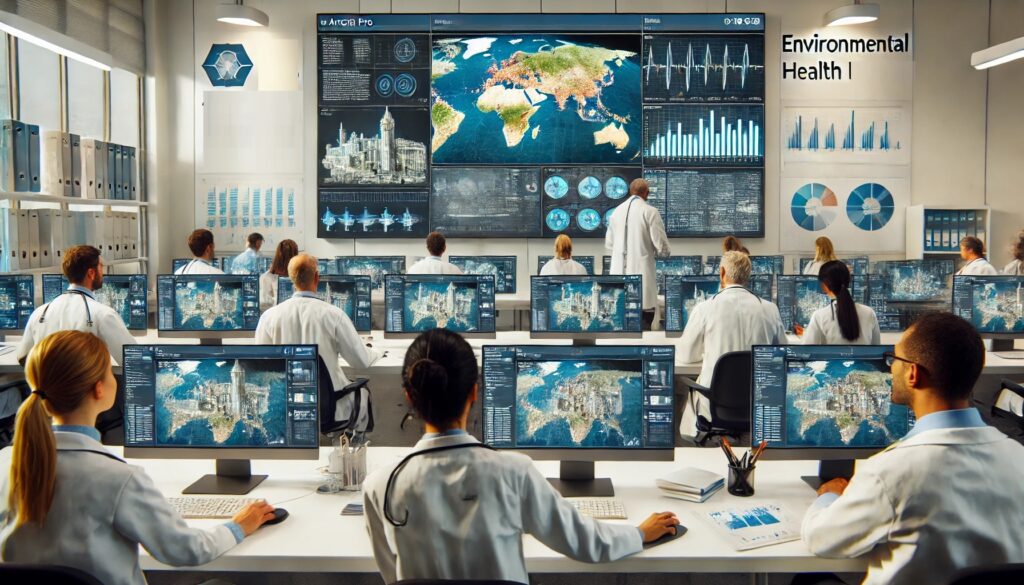
With GIS, healthcare professionals can visualize real-time data. This helps in planning emergency response and optimizing healthcare resources. For example, by mapping the locations of hospitals and clinics, one can better understand where shortages exist and where additional resources are needed. Additionally, detailed maps can be created for various health-related topics:
In addition, GIS supports environmental and health interventions. By integrating data on air quality and noise pollution, professionals can better assess the impact of environmental pollution on public health and take targeted measures.
Finally, GIS promotes access to healthcare by mapping areas with limited healthcare facilities. This makes it possible to implement targeted improvements and make healthcare more accessible to vulnerable populations. GIS thus plays an indispensable role in promoting public health and addressing global health challenges.
No experience with QGIS? Start by taking the QGIS basics course for a solid foundation.
Geospatial data plays an indispensable role in healthcare, especially in improving decision-making and healthcare planning. By integrating geospatial data, healthcare professionals can perform more accurate analyses and make better-informed decisions.
Benefits of geospatial data:
At Geo-ICT, you’ll learn how to effectively use geospatial technology to realize these benefits. The QGIS Healthcare course focuses on developing skills to collect, analyze, and visualize geospatial data. This enables you to make better health decisions and improve healthcare outcomes.
In addition, the course provides practical knowledge on how geospatial data can contribute to environmental management and public health. By integrating data on air quality, noise pollution, and other environmental factors, professionals can better understand the impact of these factors on health and plan targeted interventions.
Geospatial data is therefore essential for promoting public health and addressing health challenges. By investing in this technology, you can contribute to a healthier and safer society.
GIS, or Geographic Information Systems, form the basis for advanced analyses and visualizations in healthcare. These systems help map and analyze health data, enabling healthcare professionals to make better-informed decisions.
The core principles of GIS in healthcare are:
At Geo-ICT, you’ll learn how to effectively apply GIS in healthcare. The QGIS Healthcare course offers comprehensive training in the use of GIS software for health data analysis and visualization. You’ll gain practical experience creating maps and performing spatial analyses. This is crucial for improving public health.
Through the use of GIS, healthcare providers can not only improve access to care but also respond more effectively to emergencies and health crises. The ability to quickly and accurately visualize and analyze data makes GIS an indispensable tool in modern healthcare.
In short, the fundamentals of GIS in healthcare revolve around collecting, integrating, and visualizing data to achieve better health outcomes. With the right training and tools, such as those offered by Geo-ICT, you can make a significant contribution to promoting public health.
Analyzing healthcare accessibility is essential for improving healthcare services and addressing inequalities. Using GIS technology, we can accurately determine where the greatest shortages of healthcare services exist and where interventions are most needed.
How GIS helps analyze healthcare accessibility:
At Geo-ICT, you’ll learn how to perform these advanced analyses using QGIS. The QGIS Healthcare course provides you with the tools and knowledge to effectively use geospatial data to improve healthcare accessibility.
In addition, GIS can help monitor the effectiveness of interventions and plan future healthcare facilities. By continuously collecting and analyzing data, healthcare providers and policymakers can make better-informed decisions and optimize healthcare services for improved public health.
In short, analyzing healthcare accessibility with GIS is a powerful tool for improving care and addressing health inequities. With the right training, such as that offered by Geo-ICT, you can make a valuable contribution to promoting public health.
Choosing the QGIS Healthcare course at Geo-ICT offers many benefits that will enhance your professional skills. Our course is taught by experienced professionals with in-depth knowledge of QGIS and the healthcare sector. They provide hands-on training, so you can immediately apply what you learn. We ensure that the course content is always up-to-date. You’ll learn using the most recent and relevant information and tools. We provide continuously updated course materials and combine theory with practice, including exercises and case studies.
Our course equips you with advanced skills in using QGIS for healthcare applications. You’ll learn to use QGIS effectively to collect, analyze, and visualize health data. In addition, you will gain in-depth knowledge of the application of GIS technology for healthcare policy and management. By choosing Geo-ICT, you are investing in your future and contributing to a healthier world. With our training and support, you will be well-prepared for the challenges of modern healthcare and the possibilities of GIS technology.
The first session begins with an overview of the QGIS interface. After that, participants will consult and visualize various health maps. Participants will learn how to enable and use map layers. They will also learn about the different types of healthcare geodata available and how to view and analyze them.
The student retrieves data from various portals. The data is cleaned and made usable. This includes maps of population data, HIV cases, COVID-19 cases, and mortality rates. The student works through a number of case studies.

Do you have questions about the course content? Or are you unsure whether the course aligns with your learning goals or preferences? Would you prefer an in-house or private course? We’d be happy to help.
The QGIS Healthcare Course is a specialized training program in which participants learn to use QGIS to analyze and visualize health data.
The course is designed for both new and experienced geoinformatics professionals, companies in the geoinformatics sector, people seeking career transitions, and educational institutions that wish to explore the use of QGIS in the healthcare sector.
Geo-ICT Training Center offers high-quality, certified courses taught by experienced instructors, with a focus on practical applications within the geospatial sector.
Topics covered include health data analysis, geospatial data visualization, and map creation for public health applications.
