At Geo-ICT, we offer a wide range of courses in the field of data management. Whether you’re new to the field or looking to build on your existing skills, we have the right course for you. For example, our Data Literacy course is perfect for beginners who want to learn how to effectively interpret and use data. For those with prior experience, our Data Analysis course offers in-depth knowledge and hands-on experience with tools such as PowerBI.
In addition, we also offer a comprehensive Data Management course, where you’ll learn about the core principles of data management, including data governance and data integration. For professionals looking to specialize in data visualization, our Data Visualization course is an excellent choice. Here, you’ll learn how to transform complex datasets into understandable and interactive visualizations.
Each of these courses is designed to help you get the most value out of your data and develop skills that are immediately applicable in practice. By combining theory with hands-on exercises, we ensure that you not only gain the knowledge but can also effectively apply it in your work with geoinformation.
The Key Components of Data Management
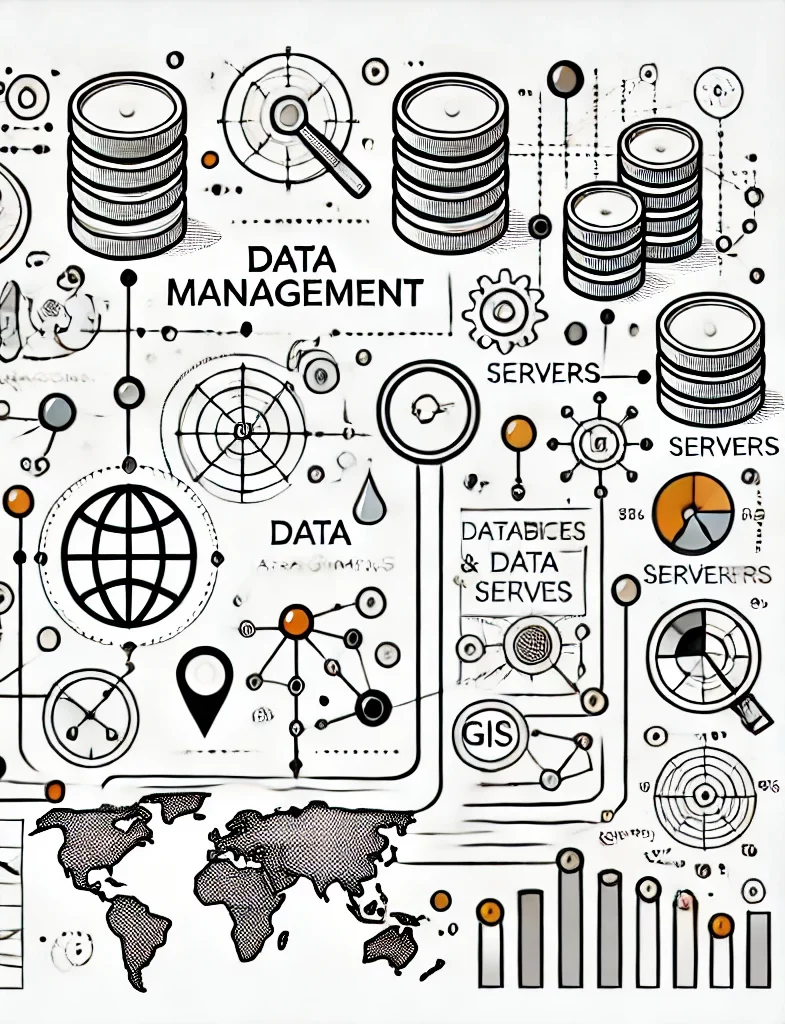
Effective data management comprises five main components: data collection, organization, protection, storage, and sharing.
Data Collection
This process involves the automatic collection of data from various sources, such as sensors and drones, which improves accuracy and efficiency.
Data Organization
Data is structured in databases and data warehouses, which is essential for accessibility and integration. This is particularly useful for geoinformation, where spatial data is managed in GIS systems.
Data protection
Protection includes encryption and access control to ensure the privacy and security of data, which is crucial for sensitive geoinformation.
Data storage
Data is stored efficiently, often in the cloud, which offers scalability and cost savings.
Data sharing
Secure data sharing promotes collaboration and innovation, for example when sharing geoinformation for policy-making.
These components help organizations extract valuable insights from their data and gain a competitive advantage.
Benefits of Good Data Management
Good data management offers numerous benefits for organizations, especially when using geospatial information. By managing data effectively, organizations ensure accurate and reliable data, which is essential for decision-making and operational efficiency. This leads to better decision-making, as well-organized data helps uncover insights and patterns that would otherwise go unnoticed.
In addition, good data management contributes to cost savings through more efficient data storage and processing, and by automating data-related tasks, which saves time and resources. It also increases productivity, as employees have quick access to reliable information, enabling them to respond more quickly to market dynamics.
Furthermore, good data management ensures improved data security through encryption and access control, which is essential for protecting sensitive information and complying with laws and regulations. All in all, good data management enables organizations to derive more value from their data, leading to better performance and a competitive advantage.
Practical Applications of Data Management
Data management offers a wide range of practical applications that help organizations improve efficiency and make better-informed decisions. Applications are particularly numerous within the field of geographic information systems (GIS). Here are some key applications:
- Supply Chain Management:
- Data management optimizes the supply chain by analyzing past performance and predicting future demand. This enables more efficient inventory management and logistics, which reduces operational costs and increases efficiency.
- Urban Planning:
- In urban planning, GIS helps manage urban growth and optimize infrastructure projects. By combining data on population density, traffic flows, and land use, urban planners can make more informed decisions about the location of new roads, parks, and residential areas.
- For example, a city can use GIS to determine the best locations for new bike and walking paths based on data about current traffic flows and population density.
- Natural hazard management:
- GIS helps map areas at risk for natural disasters such as floods and earthquakes. This enables governments and emergency services to take preventive measures and develop contingency plans.
- For example, by analyzing historical flood data, risk areas can be identified and infrastructure can be better planned to minimize future damage.
- Environmental protection:
- GIS can be used to monitor changes in land use and vegetation, which is essential for preserving biodiversity and managing natural resources. By analyzing satellite imagery, changes in forests and wetlands can be tracked.
- For example, conservation organizations can use GIS to monitor the effects of deforestation and develop action plans to protect endangered areas.
- Healthcare:
- Data management in healthcare helps monitor patient data, improve the quality of care, and optimize resources. Hospitals can use data to analyze the efficiency of treatments and develop better care pathways.
- For example, by using GIS, health services can map disease outbreaks geographically and respond more quickly by taking targeted measures.
- Marketing and Customer Management:
- By using data analytics, companies can better understand customer behavior and develop personalized marketing strategies. This leads to higher customer satisfaction and improved sales results.
- For example, retailers can use GIS to determine where their customers live and develop targeted marketing campaigns for specific neighborhoods.
These applications illustrate how essential good data management is for improving operational efficiency and making strategic decisions. By managing data effectively, organizations can not only improve their performance but also gain a competitive advantage.
Trends and Innovations in Data Management
Data management continues to evolve rapidly, with new trends and innovations helping organizations handle data more efficiently and make better decisions. Some of the key trends include:
- Advanced Data Analytics:
Companies use augmented analytics and predictive analytics to solve more complex problems and gain deeper insights. These technologies enhance data-driven decision-making processes.
- Artificial Intelligence (AI):
AI automates the processing and analysis of unstructured data, increasing accuracy and performance. For example, in GIS applications, AI can automatically label satellite images for more efficient analysis.
- Data Fabric:
Data fabric integrates end-to-end data management, enabling companies to seamlessly manage and analyze data. This promotes collaboration and real-time data analysis, particularly useful for geoinformation.
- Edge Computing:
Edge computing enables real-time data analysis close to the source, such as IoT devices. This is useful for rapid decision-making in dynamic environments such as urban planning and natural disaster management.
- Cloud-Based Data Storage:
Organizations are transitioning to cloud solutions for data storage and processing. Cloud platforms offer scalability, cost savings, and advanced analytics capabilities, significantly improving the efficiency of data management.
These trends help organizations better manage their data and gain valuable insights, giving them a competitive advantage. By staying abreast of these developments, companies can continue to improve their data strategies and be better prepared for future challenges.