
An infrastructure project planner is responsible for planning infrastructure projects, such as roads, bridges, railways, and other public works.
An infrastructure project planner is responsible for planning infrastructure projects, such as roads, bridges, railways, and other public works.
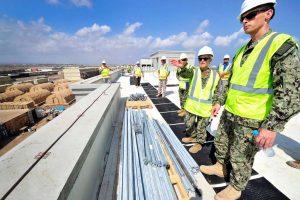 As an Infrastructure Work Planner, you play a crucial role in technical and construction projects. This position is multifaceted and essential to the success of the projects. Your daily tasks are diverse and include various responsibilities that ensure the smooth progress of the projects.
A typical day may include the following:
You will work with a wide range of professionals, from project managers and technical drafters to suppliers and field supervisors. This requires excellent communication skills and the ability to build and maintain relationships within diverse teams.
The role of an infrastructure work planner is not only versatile and challenging but also offers a clear path for personal and professional growth within the technical and construction sectors.
The role of an infrastructure project planner is fundamental in the construction and infrastructure world due to the central and multifaceted role it plays in the success of projects. Here are a few reasons why their work is so crucial:
This role requires not only technical skills but also a commitment to ongoing personal and professional development, making them indispensable in the dynamic world of infrastructure and construction.
Geoinformation plays a key role for infrastructure project planners, particularly by enabling the accurate and efficient planning and execution of infrastructure projects. The integration of geographic information systems (GIS) offers various advantages:
The combination of geoinformation with other technological tools reinforces the role of infrastructure project planners as crucial links in the successful and sustainable development of infrastructure projects.

Do you have questions about the course content? Or are you unsure whether the course aligns with your learning goals or preferences? Would you prefer an in-house or private course? We’d be happy to help.
As an infrastructure project planner, your knowledge of AutoCAD Civil 3D and Revit is indispensable. These programs are essential for designing and visualizing infrastructure projects, where precision and efficiency are paramount.
In addition to these technical skills, you have likely also completed the BIM Course offered by the Geo-ICT Training Center in the Netherlands. This training enhances your skills in Building Information Modeling (BIM), a crucial aspect of modern construction projects. With this training, you are not only able to create detailed digital designs but also to collaborate effectively within multidisciplinary project teams.
When working on projects through the Geo-ICT Training Center, you use this combined expertise to deliver optimal results to clients by leveraging your knowledge of advanced design and planning software. This makes you a valuable and highly sought-after professional in the dynamic world of infrastructure development.
As an infrastructure project planner, you play a crucial role in ensuring that infrastructure projects run smoothly. This involves various responsibilities that are essential to the success of every project. Here are the key tasks:
These tasks require a thorough knowledge of project management, excellent organizational skills, and the ability to function effectively both independently and as part of a team. As an infrastructure work planner, you are an indispensable link in the realization of projects that are crucial to infrastructure and development.
An Infrastructure Project Planner is responsible for preparing infrastructure projects such as roads, bridges, railways, and other public works. You will draw up schedules, coordinate resources, and ensure that everything is technically ready for implementation.
This role is of great importance because it serves as a bridge between design/engineering and on-site implementation. Thanks to your preparation, planning, and coordination, infrastructure projects run smoothly, efficiently, and safely—on time and within budget.
At Geo-ICT, your role combines infrastructure preparation with geoinformation: for example, you’ll use GIS maps for (GPS) location analysis, logistics planning, or risk assessment of the site.
Key skills include:
A typical workday might look like this:
Yes, Geo-ICT offers programs that train you for this role so you can start working right away—our Geo-ICT Traineeship might be just what you're looking for!
You can advance to roles such as Senior Infrastructure Work Planner, Infrastructure Project Manager, or Infrastructure Logistics/Procurement Specialist. Gaining additional experience, knowledge of BIM/geospatial information, or leadership skills will enhance your career prospects.
Although the core of your work involves infrastructure planning, knowledge of geoinformation (such as GIS data, maps, and GPS location analysis) gives you a clear competitive edge in this role. This enables you to better address terrain and location-related issues during the planning phase.
This role involves adhering to standards such as: proper project preparation in accordance with the technical design, monitoring material and resource planning, and ensuring that implementation can begin in compliance with safety and quality requirements. Documentation and communication with stakeholders are also important.
You can apply directly for the Geo-ICT Traineeship position or contact us via the widget on the website by entering your name, email address, and phone number to schedule a no-obligation conversation. You can also send us a WhatsApp message. If you have any questions about the job description or whether the position is a good fit for you, please feel free to contact us.
