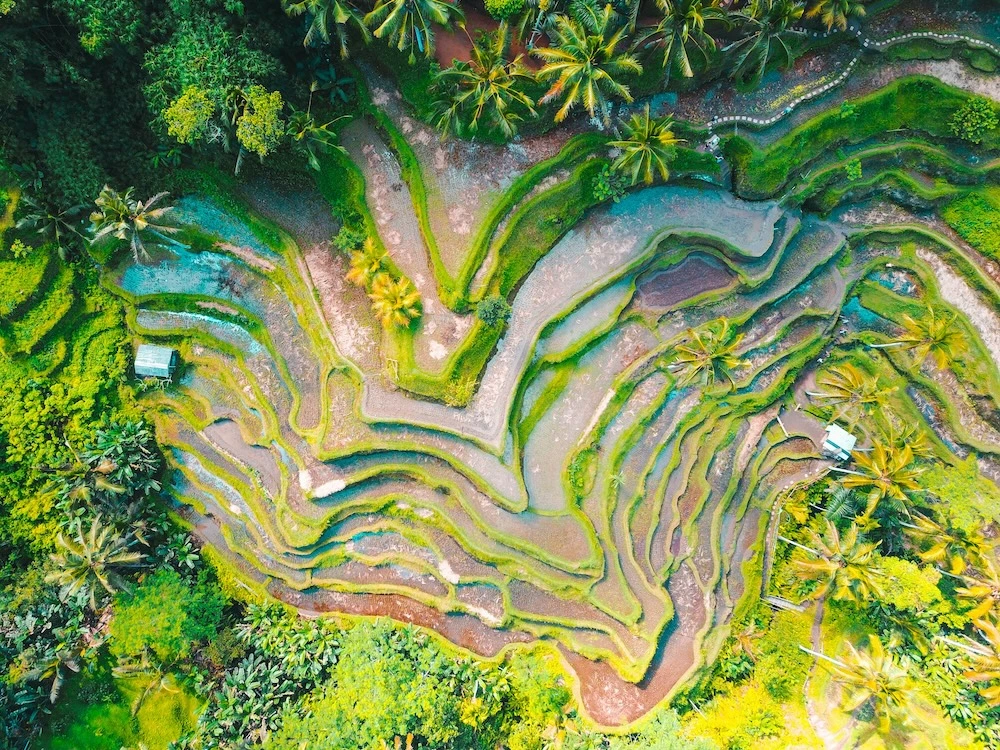
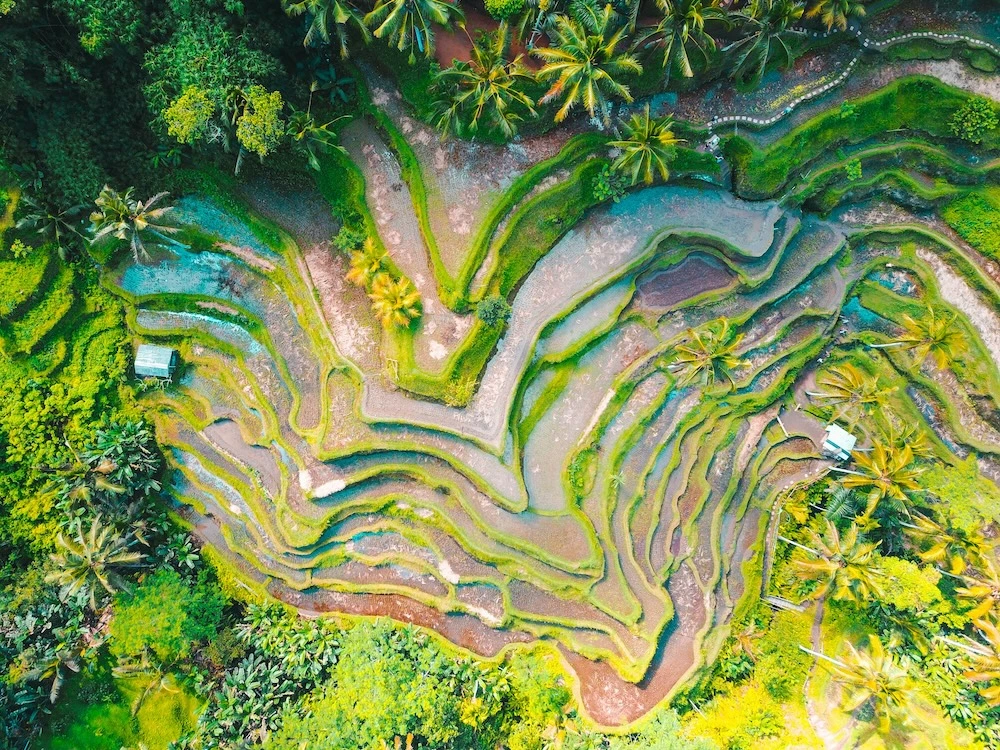
Aerial view of rice terraces in a tropical landscape, which can be analyzed using GeoAI for sustainable water and crop management.

GeoAI in agriculture: higher yields and more sustainable crop management

Agriculture is rapidly becoming digitized, and GeoAI plays a key role in this transformation. By combining artificial intelligence with geographic data—such as satellite imagery, drones, and sensors—farmers gain an accurate, real-time view of their fields. GeoAI enables targeted fertilization, irrigation, and harvesting based on data rather than intuition. This means less waste, higher yields, and more sustainable soil management.

What is GeoAI, and why is it relevant to farmers?

GeoAI involves applying algorithms (such as classification, object detection, and predictive models) to spatial datasets. Examples include time series of satellite imagery, drone orthophotos, soil moisture sensors, and historical yield maps.

By linking these sources:

  • you obtain up-to-date maps of crop vitality and growth variations;
  • you can predict where disease risks or drought stress will arise;
  • and you can target your interventions precisely by location, time, and dosage.

Whereas you previously had to go out into the field weekly to assess everything by eye, GeoAI allows you to monitor more frequently and objectively. This enables you to address variation within plots: not the same everywhere, but doing what the plot needs.

Luchtfoto van rijstterrassen in tropisch landschap, wat geanalyseerd kan worden met GeoAI voor duurzaam water- en teeltbeheer.

How GeoAI Works in Practice

Satellite imagery & drone data (NDVI/classification)

Multispectral images translate vegetation status into indicators such as NDVI. By segmenting plots into zones based on vegetation index and texture, you can identify areas where growth is lagging. Drone data allows you to zoom in further for higher resolution and specific analyses (e.g., counting rows/plant spacing or detecting gaps). Stacking multiple data points (time series) reveals structural patterns rather than a snapshot.

Field sensors & soil moisture (real-time monitoring)

Soil moisture sensors, weather stations, and tensiometers provide continuous measurements. By linking these to field maps and soil units, you can determine when and where irrigation is most effective. Furthermore, you can water before stress becomes visible, rather than reacting after the fact.

Decision-making with AI models (disease detection, irrigation, fertilization)

Combined datasets feed predictive models: from disease and pest pressure to optimal nitrogen application per zone. You can run through scenarios (e.g., “what if we apply 10% less fertilizer in zone C?”) and immediately see how that affects yield expectations and risk. GeoAI thus provides not only insight but, above all, actionable guidance.

Key applications in precision agriculture

Variable-rate fertilization and irrigation

Instead of uniform application, you work with task maps at the sub-plot level. High-potential zones receive slightly more, while weaker zones receive less. This often results in a better input-to-yield ratio and reduces the risk of leaching. For irrigation, you select the right timing and amount for each sub-zone, which saves water and prevents stress.

Crop monitoring & early disease detection

AI detects subtle changes in color, texture, and reflectance that the human eye misses. As a result, models identify stress earlier (e.g., due to nitrogen deficiency, water shortage, or early fungal infection). Early intervention means less yield loss and often also reduced use of inputs.

Harvest timing and quality improvement

By combining growth and ripening models with weather forecasts and soil status, you can determine optimal harvest times. This improves quality and uniformity and makes logistics for peeling and marketing more predictable.

Sustainability: fewer inputs, fewer emissions

Water Management and Reducing Leaching

Targeted irrigation and variable-rate fertilization reduce nutrient leaching and water consumption. By applying water and nutrients according to need, you maintain a better balance in the water and nutrient cycles and more easily meet crop and environmental goals.

Soil health and carbon sequestration

A field that is tilled and fertilized more appropriately retains its structure and organic matter. GeoAI helps identify compacted areas and vulnerable zones, allowing you to adjust tillage intensity and support soil life. This pays off in resilience and long-term productivity.

Getting Started with GeoAI (Tools & Skills)

Open-source stack (QGIS, Google Earth Engine)

With QGIS, you can build map layers, combine raster and vector data, and create task maps for machines. Google Earth Engine is ideal for rapid raster analysis of time series (e.g., cloud-free composites, index calculations, trend analyses). This allows you to get started easily and scale up to custom solutions later.

Want to apply AI to imagery within QGIS workflows? Take the Deep Learning in QGIS course to classify images, detect objects, and integrate models into your GIS process.

Commercial ecosystem (ArcGIS, imagery workflows)

If you work in enterprise environments, imagery services and web maps allow you to share and collaborate with colleagues and consultants. This ensures everyone works with the same up-to-date map layers and task maps.

Data skills you need (Python/SQL)

With a foundation in Python/SQL, you can automate repetitive tasks (loading, cleaning, feature engineering) and ensure reproducibility. Start small (notebooks, QGIS plugins), document your steps, and build a simple data pipeline.

Step-by-step implementation: from pilot to scaling up

  1. Choose one clear use case (e.g., variable nitrogen application on winter wheat).
  2. Collect and harmonize data: field boundaries, historical yields, soil scans, imagery.
  3. Conduct a baseline measurement: where are the greatest variations within the field?
  4. Run a pilot on 1–2 plots with clear KPIs (kg/ha, inputs/ha, water consumption, quality indicators).
  5. Evaluate and refine: compare results against weather and soil conditions; adjust zones or thresholds.
  6. Scale up: expand to multiple plots and crops, make processes repeatable, and train employees.

Examples of quick wins by crop

  • Grains: variable N application based on NDVI zones → more uniform stand and better tillering.
  • Potatoes: early detection of stress/disease risk → more targeted spraying, less loss.
  • Vegetables: tailored irrigation using soil moisture maps → water savings and improved quality.
  • Corn: object detection for emergence/planting gaps → targeted reseeding and efficient field visits.

Conclusion: Start small, scale up smartly

GeoAI in agriculture makes your operations data-driven: you can see what’s happening, predict what’s coming, and focus on the actions that deliver the greatest results with the least input. Start small with a single use case, collect consistent data, and scale up once the pilot proves profitable.

Get the best
Geo content delivered to your inbox every week

Get the best
Geo content delivered to your inbox every week

Get the best
Geo content delivered to your inbox every week

Frequently Asked Questions About GeoAI in Agriculture

Work with clear agreements regarding plot, machine, and sensor data. Anonymize data whenever possible, and separate operational data (for daily use) from model data (for training and validation). Implement role- and permission-based access controls when sharing data with consultants or contractors.

No. Start small with free or low-cost tools and a single, clear use case. You can make targeted investments once the pilot proves profitable.

Start with ready-made workflows (Deep Learning QGIS projects, simple scripts) and standard index analyses. Later, expand your capabilities with your own models or external datasets.

GeoAI is only as good as the quality of the data and the variation within your field. Sometimes, soil or drainage improvements are needed first before variable-rate application can deliver optimal results.