
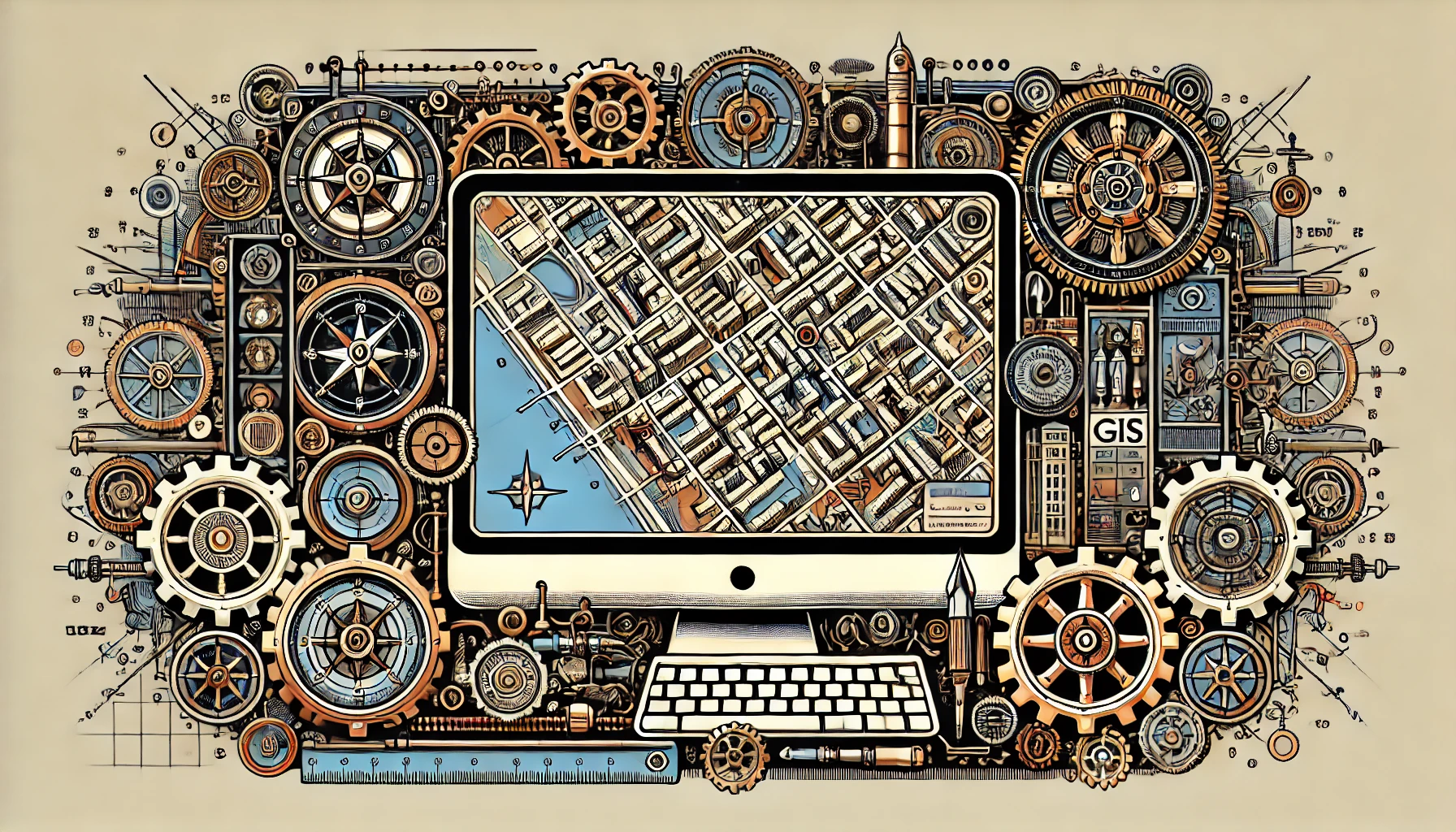
Geo-ICT refers to information technology applied to geographic data. This includes systems and software used to create maps, perform spatial analyses, or manage infrastructure.

Are you ready for a career change with a bright future? In this article, you’ll discover why Geo-ICT is the sector where data, technology, and social impact come together—and how you can play a role in it.
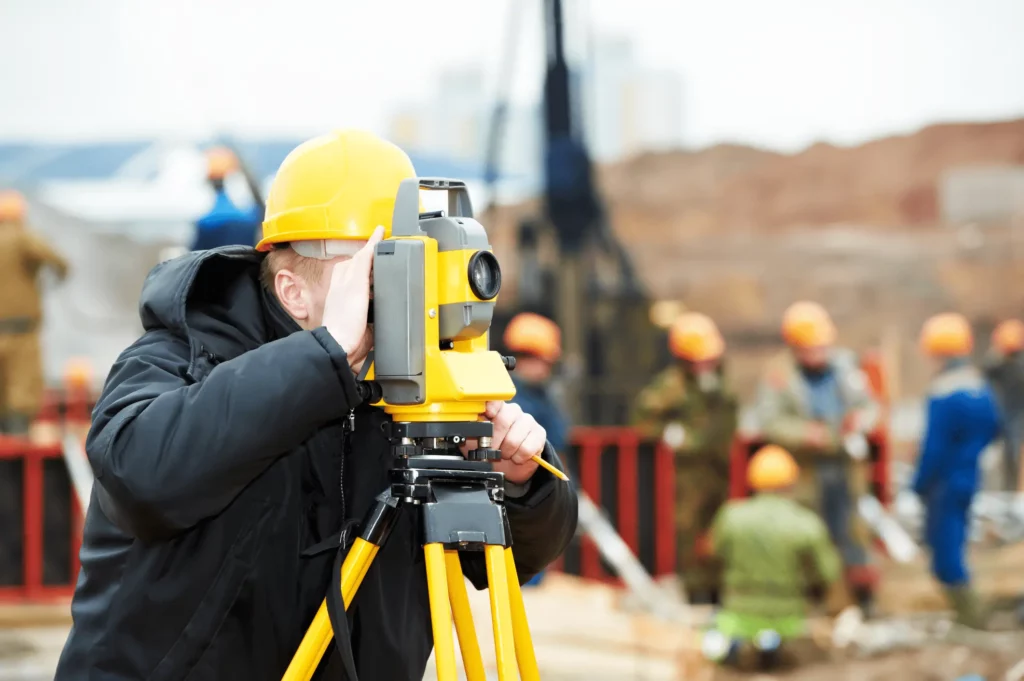
The Netherlands faces major challenges in the public sector: by 2030, some 900,000 new homes must be built to meet growing demand. At the same time, serious efforts must be made toward the energy transition, utilizing sustainable energy sources and smart infrastructure. These challenges require specialists who can effectively utilize geographic information (GIS), technical designs (CAD), and geo-data. By retraining in Geo-ICT, you’ll become part of a sector that’s essential for solving these societal and spatial challenges, and you’ll create excellent career opportunities for yourself.
Retraining in Geo-ICT also means choosing work that matters. You’ll contribute to concrete solutions for current challenges such as sustainability issues, spatial development, and better decision-making through data. With your knowledge of geographic information, you’ll make a visible contribution to a smarter, more sustainable, and more efficient society. In short, you’re not just choosing a job, but a career with impact.
Curious about which Geo-ICT roles suit you? Check out our job catalog and discover your opportunities!
 GIS Specialist
As a GIS specialist, you work with geographic information systems (GIS) to provide insights into location-based data. You develop digital maps, analyze spatial data, and advise organizations on how to use their geographic information more intelligently and efficiently. This could be for municipalities, consulting firms, or environmental projects, for example.
CAD drafters translate designs and plans into clear technical drawings. You do this using CAD software such as AutoCAD or MicroStation. You often collaborate with architects, engineers, or project developers and are involved in projects such as housing construction, infrastructure, and sustainable energy networks.
As a Geo-data analyst, you are responsible for collecting, analyzing, and visualizing geographic data. You convert data into actionable insights that inform better policy choices and smart business decisions. This includes areas such as urban development, mobility planning, and environmental analyses.
A Geo-Application Administrator ensures that geographic applications and systems always function properly. You manage, maintain, and optimize software used within organizations to make geo-data accessible and process it. Thanks to you, employees can reliably use up-to-date geographic information.
Curious which role suits you best? Check out Geo-ICT’s complete job catalog!
 Practical training and courses
Retraining for a career in Geo-ICT is all about getting hands-on experience. At Geo-ICT.nl, you can immediately start with practical training and courses that help you develop the skills employers are looking for. These include GIS with ArcGIS Pro and QGIS, CAD drafting with AutoCAD or MicroStation, or specialized training such as Remote Sensing and Geospatial Analysis.
Our training programs are available both as fully in-person classes and through blended learning. If you choose in-person classes, you’ll receive intensive group instruction. If you opt for blended learning, you’ll follow a flexible rotation model, combining independent study with regular check-ins with an experienced instructor. This ensures your training perfectly aligns with your personal situation and learning style.
Certificates and accredited programs demonstrate your knowledge. You can choose from short courses with certificates to comprehensive training programs leading to accredited diplomas. Our programs are closely aligned with employers’ needs. Take a look at our current job openings in Geo-ICT.
A retraining program doesn’t have to be a financial burden. There are often various financing options available, such as grants from municipalities, the UWV, or employers. We’d be happy to inform you about the different options to make your retraining financially feasible.
Are you ready to take your first step toward a career that combines data with impact? Feel free to contact us today. We’d love to help you figure out your next steps!


Geo-ICT refers to information technology applied to geographic data. This includes systems and software used to create maps, perform spatial analyses, or manage infrastructure.
Anyone interested in data, technology, and the physical environment can retrain. A background in fields such as construction, infrastructure, the environment, or IT is helpful but not required.
You will learn to work with tools such as ArcGIS Pro, QGIS, AutoCAD, MicroStation, and possibly FME, PostGIS, or other geodatabases, depending on your chosen specialization.
Job prospects are excellent. Due to the housing construction boom, the energy transition, and digitalization, there is a growing demand for GIS specialists, CAD drafters, geodata analysts, and geo-application administrators.
Yes, blended learning offers a flexible way to study. You combine self-study with in-person sessions, making it easy to balance with work or other commitments. In addition, all of our in-person courses are available online, and the learning programs are always relatively short (1 to 6 days at most).
No problem! Through the Geo-ICT Traineeship, you’ll have the chance to explore different roles and technologies while you learn and work. You’ll receive training, guidance, and placement with a suitable client. It’s ideal if you want to get a feel for the field before making a final decision.