What Does a Data Analyst Do?
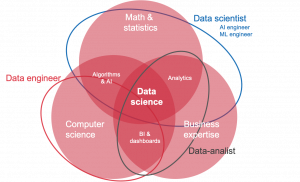 As a data analyst, you play a crucial role in interpreting geographic data to generate meaningful insights. Your daily tasks include collecting, processing, and analyzing data, which is essential for supporting strategic decisions. Here are some key activities you’ll be involved in:
- Collecting data: You gather data from various sources to create a comprehensive dataset. This includes, for example, data from the EU Copernicus Program.
- Data processing: Cleaning and structuring data for analysis.
- Analysis: You use advanced analytical tools and techniques such as Python, R, and SQL to identify patterns and trends.
In addition to these technical skills, your ability to translate complex information into understandable language is invaluable. You’re not just working with numbers; you translate them into practical insights that help the company move forward. Your analyses have a direct impact on business strategy and development, especially in how geoinformation is used to understand environmental issues or predict market trends.
Let’s not forget that your work impacts many sectors, from public administration to the financial world, where your insights help drive better decision-making. Your role as a data analyst is therefore not just important; it is indispensable in our data-driven world.
Why is the work of a Data Analyst important?
The work of a Data Analyst is fundamental to any organization that prioritizes data-driven decision-making. By transforming complex data into clear insights, you enable decision-makers to make informed choices. Here are a few reasons why your role as a data analyst is so crucial:
- Strategic decisions: Your analyses help shape strategies that move the company forward.
- Efficiency improvements: You identify opportunities for process improvements that save costs and increase efficiency.
- Risk management: By recognizing trends and patterns, you help minimize risks.
In the world of geoinformation, your work plays a key role in addressing larger issues such as urban planning and environmental management. Your insights help in understanding complex geographic phenomena and influence decisions ranging from land use to disaster management.
The impact of your work thus extends far across various domains and makes you indispensable in today’s data-driven decision-making. Your skills ensure that large amounts of information become manageable and usable for everyone within your organization.
The role of geoinformation in a Data Analyst’s work is both profound and transformative. Geoinformation provides geographic context that is essential for many sectors, from urban development to environmental sciences. Your expertise enables you to translate this complex information into practical insights. Some key ways in which geoinformation influences your work include:
- Location Analysis: Determining optimal locations for business expansions or emergency services.
- Trend analysis: Tracking demographic and economic trends across geographic areas.
You use advanced tools to manipulate datasets containing location data, allowing you to offer unique insights that would otherwise go unnoticed. This not only makes your work vital for strategic planning but also strengthens your role as a bridge between raw data and decision-making.
In practice, this means you contribute to projects ranging from optimizing delivery routes to predicting urban growth, which has direct economic and social benefits. Your analyses therefore not only help in making better decisions but also contribute to a more sustainable and efficient society.