Interested in taking an AI course or training program?
Why is AI here to stay?
Artificial Intelligence (AI) marks a turning point in how we use technology, with systems that learn, reason, and solve problems. It helps us tackle complex challenges more efficiently, from healthcare to environmental protection. AI drives innovation in virtually every field, improving productivity and quality of life by recognizing patterns and making predictions. It is indispensable in the modern world.
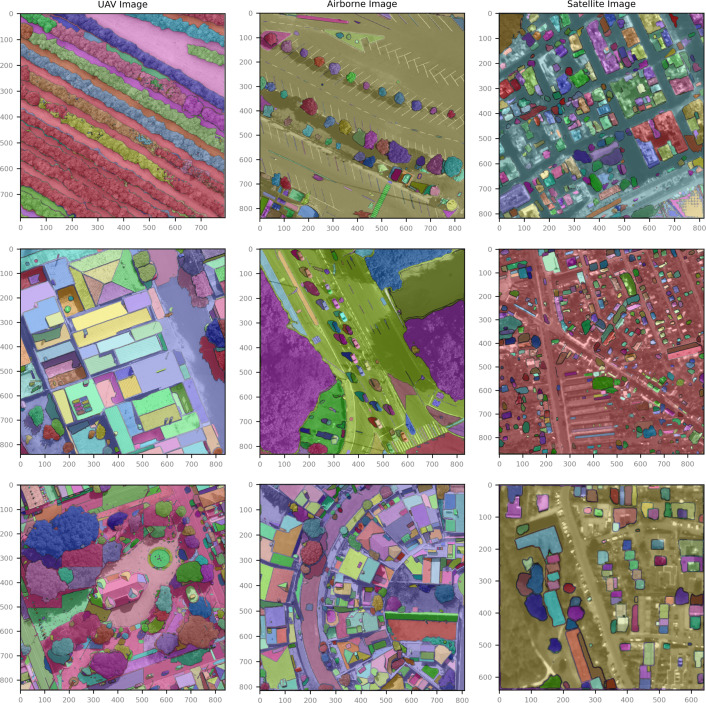
Within AI, GeoAI plays a crucial role. GeoAI combines AI with geographic information systems (GIS) to solve spatial problems, such as urban planning and environmental monitoring. It analyzes large amounts of geographic data and offers solutions for sustainable development.
By embracing AI and GeoAI, we open the door to unprecedented possibilities. Are you ready to be part of this exciting journey?
Why choose an AI course or program at Geo-ICT?
Choosing Geo-ICT for your AI education means choosing a path that leads not only to knowledge, but also to innovation and future opportunities. At Geo-ICT, you’re in control of your own learning experience, supported by experts who not only have in-depth knowledge of GeoAI, but also apply it every day. Our courses are designed to provide you with both the theoretical foundations and practical skills so that you can make an immediate impact in whatever field you choose. What sets us apart is our focus on real-world applications of GeoAI, combined with a learning environment that is both inspiring and challenging. We encourage you to experiment, innovate, and push your boundaries. Additionally, Geo-ICT offers a community where you can network with like-minded individuals and professionals, which is essential in the rapidly evolving world of technology. With us, your AI journey is not just a learning path, but an adventure that prepares you for the future.
At Geo-ICT, we believe that a broad range of knowledge and skills is essential to truly excel in the world of AI. That is why we are proud of the diversity of our course offerings, which are designed to meet your unique needs and interests. From the fundamentals of AI to advanced techniques in data analysis and machine learning, and applications of AI in the world of geoinformation, you will find the course that sets you on the path to success.
In all courses, we place a strong emphasis on the legal, ethical, and organizational aspects of AI, tailored to the level and role of the participants.
At Geo ICT Training Center, we offer three distinct learning paths:
AI for Users
For anyone who wants to use AI effectively in their daily work without having to code themselves.
• You’ll learn what AI is, what it can and cannot do, and what opportunities and risks exist within your organization.
• You’ll gain hands-on experience with tools such as chatbots and generative AI for text, images, and analysis.
• We consistently consider privacy, data ownership, the reliability of output, and the impact of AI on work processes and responsibilities.
For specialists, data analysts, and other professionals who want to apply AI in their field.
You’ll delve into (Geo) AI applications for data analysis, decision-making, and geographic information processes.
You’ll learn to work with existing AI models, dashboards, and workflow automation without becoming a full-time developer.
In addition to technical aspects, we cover legal frameworks (such as AI legislation and privacy), ethical dilemmas (bias, transparency), and organizational integration (governance, roles, and responsibilities).
For developers, data scientists, and technically oriented professionals who want to build their own AI solutions.
You’ll learn to select, train, test, and integrate models into existing systems and geo-IT environments.
Focus on MLOps, data quality, security, and scalable architectures.
Legal, ethical, and organizational aspects are incorporated into design, documentation, monitoring, and management, so you can not only build but also deploy responsibly
Each course is designed with your success in mind, offering a blend of theoretical knowledge and practical skills you can immediately apply in your current or future job. Our goal is not only to inform you, but also to inspire and motivate you to push the boundaries of your own potential.
Whether you’re just starting your GeoAI journey or ready to take your existing knowledge to the next level, at Geo-ICT you’ll find a course that fits your ambitions. Are you ready to take the next step? Explore our course offerings and find the perfect match for your career goals.
How GeoAI is Shaping Our Future
It is no exaggeration to say that Artificial Intelligence (AI) is the driving force behind some of the most revolutionary changes we are seeing and will continue to see in our lives. From how we work and learn to how we spend our free time, AI has the potential to transform every aspect of our existence. And as we look ahead, it’s clear that AI isn’t just playing a role in shaping our future; it’s crucial in determining the direction of human progress. More specifically, GeoAI plays a key role within this broader field.
One of the most exciting aspects of both AI and GeoAI is its ability to solve complex problems that are too challenging for humans. Consider climate change, one of the greatest challenges of our time. AI can analyze massive datasets to identify patterns that humans cannot see, helping us better understand how to protect our planet. In healthcare, too, AI is leading to breakthroughs that can save lives, such as accelerating the development of new drugs or personalizing treatments for patients.
But the impact of AI and GeoAI goes beyond solving problems. It also changes the way we interact with the world around us. Think of smart assistants that simplify our daily tasks, or recommendation systems that help us discover new music, movies, or even friends. These technologies are made possible by AI, and they are becoming smarter and more intuitive every year.
Yet the rise of AI and GeoAI also brings ethical and social issues. As we explore this new frontier, it is vital that we reflect on the consequences of AI technology—from privacy and security to its impact on the labor market. It is up to us to ensure that the development of AI benefits everyone, not just a select few.
By choosing a GeoAI program at Geo-ICT, you’re not only taking part in an exciting technological revolution; you’re also helping to shape a future where technology and humanity work together in harmony. Are you ready to take on the challenge and make a positive impact on the world with GeoAI? Your journey starts here, at Geo-ICT.
The Basics of Machine Learning and Deep Learning
At the heart of the Artificial Intelligence revolution lie Machine Learning (ML) and Deep Learning (DL), two concepts that have fundamentally changed the way machines learn and perform tasks. Machine Learning, a subset of AI, enables computers to learn from and adapt to new data without being explicitly programmed for every task. This means that machines can improve through experience, just as humans do. Deep Learning, a subset of Machine Learning, takes this a step further by using neural networks inspired by the human brain. These networks can process large amounts of data, recognize complex patterns, and make decisions with astonishing accuracy.
The beauty of ML and DL is that they are applicable across a wide range of sectors, from improving customer service with chatbots capable of more natural conversations to revolutionizing healthcare by predicting diseases with greater precision than ever before. They are also crucial for the development of self-driving cars, where DL is used to teach vehicles to recognize and respond to their environment.
An important aspect to understand about ML and DL is that they aren’t just about programming machines to perform tasks; they’re about creating systems that can grow and evolve. This ability to learn and adapt makes AI incredibly powerful, but also complex. It requires a deep understanding of not only the technology, but also the data that feeds these systems.
At Geo-ICT, we understand this complexity and offer courses that not only teach you the technical skills you need to succeed in ML and DL, but also the critical thinking skills to consider the ethical and social implications of these technologies. Whether you’re new to the world of AI or looking to expand your existing knowledge, our courses provide the foundation you need to navigate the rapidly changing landscape of machine learning and deep learning.
Ready to explore the depths of Machine Learning and Deep Learning and see how they are shaping the world around us? Your adventure begins at Geo-ICT, where you’ll find the tools and knowledge to make a real impact with AI.
Practical applications of AI and GeoAI that will change your life
In recent years, Artificial Intelligence (AI) has rapidly evolved from a futuristic concept into an essential part of our daily lives. The practical applications of AI are all around us and have transformed the way we work, learn, and even interact with one another. From smart assistants on our phones that help us plan our day to personalized recommendation systems on streaming platforms that know exactly which new series we want to binge-watch, AI makes it all possible.
In healthcare, AI is revolutionizing the way diagnoses are made and treatments are recommended, enabling healthcare providers to create personalized care plans tailored specifically to each patient’s needs. Self-driving cars use AI to make roads safer by reducing human error. In retail, AI is used to improve customer service, optimize inventory management, and even prevent fraud.
In addition to AI, GeoAI also plays a crucial role in these transformations. GeoAI, or geographic artificial intelligence, combines AI techniques with geographic information systems (GIS) to solve complex spatial problems. It helps analyze geographic data for applications such as urban planning, natural disaster management, and environmental monitoring.
These examples are just the tip of the iceberg when it comes to the impact of AI and GeoAI on our daily lives. As we look further into the future, it is clear that these technologies will transform even more areas, from sustainable energy solutions to combating climate change. The possibilities are endless, and at Geo-ICT, we’re excited to provide you with the knowledge and skills you need to play an active role in this ongoing evolution. Are you ready to discover how you can change the world with GeoAI? Then explore our range of courses and be inspired by the limitless possibilities of GeoAI.
As a partner of the NLAI coalition, we are actively committed to promoting the responsible and practical use of AI in the Netherlands, with geoinformation being one of our key—though not our only—areas of expertise. In addition to GeoAI training programs, we also offer general AI and programming courses for users, professionals, and developers across various fields.
Our AI courses are designed for users, professionals, and developers. We offer introductory courses for those with no programming experience, advanced training for industry professionals, and technical courses for developers who want to build and integrate AI.
That depends on the course. User and professional courses are often no-code or low-code, while developer courses do require programming knowledge (e.g., Python or Go).
Our courses are highly practical. Theory is directly linked to hands-on exercises, realistic use cases, and practical workflows in GIS, data analysis, and software development.
Yes. We make extensive use of open-source software and state-of-the-art AI models, so that participants learn to work with techniques that are also used in real-world practice and the professional field.
Absolutely. All courses are designed with immediate practical application in mind. You’ll not only learn what AI is, but more importantly, how to use it effectively within your own organization or projects.
Search the website
Find courses, MOOC content, articles and more in one place.