GIS Operator Position

A GIS operator is responsible for managing, analyzing, and visualizing geographic data using GIS software. GIS combines geographic data (such as maps, satellite imagery, and demographic information) with attribute data (such as economic data and population statistics) to generate insights and analyze spatial relationships.

What does a GIS Operator do?
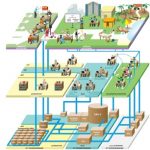
Geo-ICT Training Center, Nederland - Functie GIS OperatorAs a GIS Operator, you play a crucial role in managing and visualizing geographic data. Your daily tasks are not only technical in nature but also creative, as you translate complex information into understandable and visually appealing maps. Here are some of the key activities you’ll be involved in:

  • Analyzing spatial relationships between different data layers.
  • Using GIS software to produce detailed maps that aid in urban planning, environmental management, and more.
  • Data processing and editing: accurately entering and updating data in GIS databases.

In addition to these technical skills, you’ll be involved in advising policymakers and stakeholders. Your insights help inform well-founded decisions regarding spatial development and crisis management. This role is therefore not only important for visualizing data but also serves as a bridge between data and practical real-world applications. Your work directly influences how communities develop and how we manage our natural and built environments.

Why is the work of a GIS Operator important?

The work of a GIS Operator is invaluable to both governments and businesses. With your expertise in geographic information systems, you contribute to more efficient processes and better-informed decision-making. Here are a few reasons why your role is so crucial:

  • Decision-making: You make data visually accessible, making complex information easier for decision-makers to understand.
  • Risk management: By mapping natural hazards and land use, you help plan measures to minimize risks.
  • Development and planning: Your work supports urban planning and development, enabling cities to grow more sustainably and efficiently.

Every map layer you create or edit has the potential to make a significant impact. Whether it involves managing natural resources, planning new infrastructure, or responding to crisis situations, your skills ensure that critical information is available and up-to-date. This makes your role not only relevant but also indispensable in the pursuit of a well-organized and informed society.

The Impact of Geoinformation on a GIS Operator

Geo-information plays a fundamental role in the daily tasks of a GIS Operator. This data not only helps shape the physical world around us but also directly influences how you perform your work. Below are some key influences:

  • Real-time decision-making: With up-to-date geoinformation, you can respond quickly to changing conditions, such as weather changes or emergencies.
  • Improved accuracy: You use geo-information to increase the precision of maps and spatial analyses, which is essential for accurate planning and implementation.

Integrating geospatial data into your workflow not only makes you more efficient but also provides a deeper understanding of the geographic context. This is crucial for tasks such as planning urban expansion or environmental management. Your expertise ensures that this information is transformed into actionable insights that have a direct impact on decision-making across various sectors. As a result, your role as a GIS Operator is indispensable in the effective use of geoinformation.


Informeer & Solliciteer

Job Opening: Junior GIS Specialist

Geo-ICT Training Center, Netherlands is a platform for entry-level professionals, those seeking career transitions, and those returning to the workforce. We train you for the role and have a variety of clients where we can help you get started. You will remain employed by us for one year, after which you may be hired directly by the clients. If you are interested, please apply for the junior GIS specialist position.

Want to know more?

Do you have questions about the course content? Or are you unsure whether the course aligns with your learning goals or preferences? Would you prefer an in-house or private course? We’d be happy to help.

Opleiding

As a GIS Operator, you possess extensive knowledge and skills in both ArcGIS and QGIS. Your expertise extends to advanced proficiency in FME, enabling you to perform complex geodata transformations and analyses. Thanks to the training offered at the Geo-ICT Training Center Netherlands, you are well-prepared to work with a variety of clients. This program ensures that you are not only technically competent but also immediately deployable in the field, where you provide valuable insights and support with your geoinformation skills.

Taken

As a GIS Operator, your responsibilities include a wide range of tasks that are essential for the effective management and use of geographic information. Here are the key activities you perform on a daily basis:

  • Data collection:
    • You collect geographic data from various sources such as maps, aerial photos, GPS devices, and government databases.
    • This may involve fieldwork to collect data directly on-site, making your role both dynamic and field-oriented.


  • Data management:
    • You organize and manage geographic data in a GIS database.
    • This involves entering, updating, and verifying data to ensure it is accurate and up-to-date.


  • Data Analysis:
    • You perform spatial analyses to identify patterns, trends, and relationships within the data.
    • Analysis techniques include geoprocessing operations such as buffering, overlay analysis, spatial querying, and network analysis.


  • Map Production:
    • You create maps and graphical visualizations based on the analyzed data.
    • This task requires cartographic skills to present data effectively and clearly.


  • User support:
    • You provide support to users of the GIS system by answering questions, resolving technical issues, and providing training on the use of GIS software and tools.


These tasks ensure that, as a GIS Operator, you play a central role in translating complex geodata into practical and accessible information that can be widely applied.

Frequently Asked Questions About the GIS Operator Position

A GIS Operator is responsible for managing, analyzing, and visualizing geographic data using GIS software. You translate complex data layers (such as maps, satellite imagery, and demographic data) into clear maps and analyses.

This role is important because your work directly contributes to a better understanding of spatial relationships, improved decision-making, and efficient planning. Whether it involves infrastructure, the environment, urban development, or crisis management—your maps and data help ensure the right decisions are made.

At Geo-ICT, the focus is on geographic information combined with GIS skills: you manage geographic data, work with maps and GIS tools, and provide support to various sectors. This means the role involves more than just basic mapping; you work with up-to-date data and visualizations.

Key skills include:

  • Proficiency in GIS software such as ArcGIS and QGIS, and the ability to process data in GIS databases.
  • Ability to perform spatial analyses (buffers, overlays, networks) and create visualizations.
  • Accurate work with data entry, quality control, and management of geographic databases.
  • Strong communication skills: you support users and make geographic insights understandable.

A typical workday might look something like this:

  1. Importing and verifying new geographic data or changes to maps.
  2. Performing spatial analyses to identify trends or relationships in the data.
  3. Creating or updating map materials and visualizations for internal or external stakeholders.
  4. Supporting users or teams with GIS questions or map materials.
  5. Possibly consulting with colleagues or stakeholders regarding the application of the map or data results.

Yes, Geo-ICT offers training programs that prepare you for this role so you can start working right away. Take a look at the GIS Specialist job opening, for example. Not sure if this is the right fit for you, but interested in working in the Geo-ICT sector? Then the Geo-ICT Traineeship might be just what you’re looking for!

You can advance to roles such as GIS Specialist, GIS Analyst, or Geodetic Engineer. By developing additional skills (such as scripting, automation, and geodata modeling), you’ll expand your career opportunities and be able to get involved in more complex projects.

Yes—while basic GIS skills are important, knowledge of geoinformation (such as geodatabases, location analysis, and data integration) will make your role at Geo-ICT more impactful. It will help you better translate geographic insights and apply them to practical projects.

This role involves adhering to quality standards regarding data quality and map/data management: proper use of metadata, accurate recording, version control, and security of (geo)data. The reliability and validation of geographic analyses are also of great importance.

You can apply directly for the Junior GIS Specialist position or our Geo-ICT Traineeship, or contact us via the widget on our website by entering your name, email address, and phone number to schedule a no-obligation conversation. You can also send us a WhatsApp message. If you have any questions about the job description or whether the position is a good fit for you, please feel free to contact us.