
The Advanced Python course covers all topics that may be relevant when programming in projects, such as testing, debugging, packages, multithreading, databases, and network sockets.
Python
The Advanced Python course covers all topics that may be relevant when programming in projects, such as testing, debugging, packages, multithreading, databases, and network sockets.
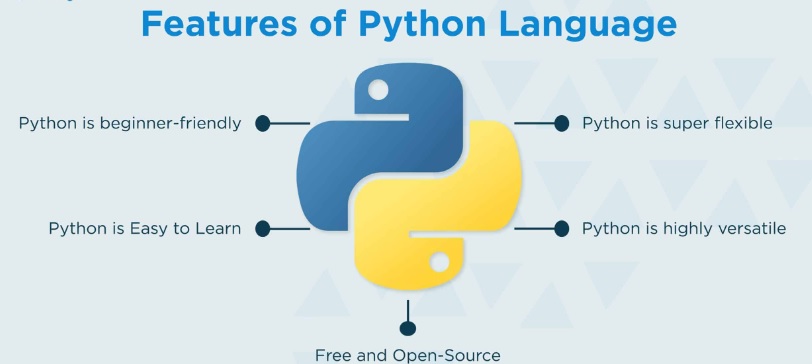
In the world of programming, Python has become a language appreciated by both beginners and experienced developers. But what makes Python so popular, and why is it worth diving into this language, especially if you already have some programming experience? Python is known for its simple syntax, which closely resembles the English language, making it not only accessible but also allowing you to do more with less code. This is an essential advantage in a world where time is money.
Python runs on an interpreter system, which means code can be executed immediately as soon as it is written. This facilitates rapid prototyping, an indispensable feature in the rapidly changing landscape of technology and geoinformation. Python’s versatility is also evident in its diverse applications, ranging from web development and data analysis to artificial intelligence and scientific research.
In this course, you will delve deeper into Python packages such as NumPy, SciPy, and Pandas, enabling you to perform advanced data analysis and scientific computations. These are essential skills in fields rich in geodata. This, combined with a focus on improving your ability to write efficient Python code by using syntax highlighting and command-line arguments with the argparse module, ensures that upon completing this course, you will not only have mastered Python at an advanced level but will also be able to put this knowledge into practice immediately.
A good way to prepare for this Advanced Python course is to take our Python Basics course.
When you dive into Geo-ICT’s Advanced Python Course, you open the door to the versatile world of Python interpreters. Python is unique because it has multiple “dialects” or implementations that serve different purposes, depending on technical needs and environments. This diversity is a strength that makes Python special in the programming world, and here are a few examples:
Each of these interpreters extends Python’s functionality and opens up new possibilities for development, especially in specialized fields such as geoinformation and geodata processing. By understanding the different interpreters and knowing how to apply them, you increase your flexibility and adaptability as a developer.
In our course, we not only explore these interpreters but also teach you how to make the right choice for your projects. Whether you’re interested in web development, data analysis, software development, or working within a specific framework like .NET or JVM, our Advanced Python Course provides you with the knowledge and skills you need.
Python isn’t just another programming language; it’s a tool that empowers developers to achieve more with less effort. This is why Python consistently emerges as a top choice for both beginners and experienced developers in the world of software development, and specifically for applications in geoinformation and geodata processing. Here are a few reasons why Python is such a popular choice:
So what specifically makes Python ideal for work in the geoinformation sector? The answer lies in its ability to handle, manipulate, and analyze complex data structures. Geoinformation often requires working with large datasets, such as maps and satellite imagery, where Python’s capabilities for data analysis and processing—supported by libraries like NumPy, Pandas, and GeoPandas—are invaluable.
On top of that, Python has a vibrant community. Problems? Questions? Chances are someone has already posted a solution or answer. This support network, combined with Python’s constant evolution, ensures that as a developer, you never stand still.
If you’re serious about getting started with Python, setting up a robust and flexible work environment is essential. This is where Anaconda and Jupyter Notebooks come into play. These tools aren’t just utilities. They are essential components that unlock the power of Python, especially for advanced projects in geoinformation and data analysis.
The combination of Anaconda and Jupyter makes your Python development process not only more efficient but also more enjoyable. They enable you to work with complex datasets, perform analyses, and present your results in an understandable way. Whether you’re diving deep into geodata or developing machine learning models, these tools will form the foundation of your work.
As you explore the depths of Python programming, it is essential to become familiar with some of the most powerful tools in your development arsenal: NumPy, SciPy, and Pandas. These packages form the backbone of scientific computing in Python and offer unprecedented capabilities for data analysis, mathematical computations, and working with geoinformation.
Together, these tools provide a powerful platform for anyone involved in data analysis, scientific research, or any form of computational statistics.
In our course, you’ll not only have the opportunity to learn about and use these tools, but we’ll also delve deeper into how you can integrate them into your projects to solve complex problems. We’ll use practical examples that demonstrate how NumPy, SciPy, and Pandas work together to create powerful data analysis pipelines.
Every developer knows that writing code is only part of the job; making it understandable and maintainable is an art in itself. This is where syntax highlighting and argparse come in handy, two indispensable tools for any Python programmer striving to make their code not only functional but also readable.
By combining these tools, you not only improve the quality of your code but also make it easier for other developers to work with and understand your scripts.
At a time when the demand for expert Python developers continues to grow, our Advanced Python Course at Geo-ICT offers not only an in-depth exploration of Python’s advanced features but also a unique blend of expertise in geoinformation. But what makes our course so special compared to others? Here are a few reasons:
By choosing our Advanced Python Course, you’re not just choosing a training program; you’re choosing a path to mastery in Python with a special focus on geoinformation. You will not only be equipped with advanced programming skills, but you will also be immersed in the specific challenges and opportunities that the world of geoinformation offers. This makes our course an indispensable step for anyone striving to become a true expert in Python and its real-world applications.
On the first day of the Python course, we’ll review basic concepts such as collections and functions. The rest of the day will be dedicated to object-oriented programming (OOP), where we’ll first focus on classes, object instances, and inheritance. Later, we’ll also cover more advanced topics, such as polymorphism and design patterns. Practical application is central, with hands-on exercises to help you fully understand this abstract topic.
After this day, you will be able to:
On day two of the Advanced Python course, we focus on refining your programming skills. Starting with error handling, you’ll learn how to handle exceptions in a structured way. Next, we’ll dive into logging and debugging, where you’ll learn to use log files for program analysis and bug fixes. The day ends with unit testing, where you’ll acquire essential skills to ensure the reliability of your code. A hands-on day that takes your Python programming skills to the next level.
After this day, you’ll be able to:
On day three of the course, you will explore Lambda functions, recursion, decorators, and generators. Efficient coding and memory management are central to this. Next, we’ll cover database connections. The focus here will be on SQLite and PostgreSQL, including the use of SQL queries in Python. The day ends with practical exercises for immediate application of the concepts learned. An intensive day that strengthens your Python skills and makes them immediately applicable.
After this day, you will be able to:
On the final day of the Advanced Python course, we’ll explore key concepts. We’ll start with modules, packages, and distribution to help you better structure and share your code. Next, we’ll cover sockets and pipes for inter-process communication. In the final section, we focus on threading and multiprocessing for parallel tasks and optimal performance. A valuable conclusion to take your Python skills to the next level.
After this day, you will be able to:

Do you have questions about the course content? Or are you unsure whether the course aligns with your learning goals or preferences? Would you prefer an in-house or private course? We’d be happy to help.
This course provides advanced knowledge of Python, with a focus on testing, debugging, packages, multithreading, databases, and network sockets.
This course is ideal for experienced Python programmers who want to deepen their knowledge and expand their skills.
The course covers key packages such as NumPy, SciPy, and Pandas, which are essential for advanced data analysis.
The course lasts 4 days and is intensive and hands-on.
Yes, the course includes hands-on exercises and real-world examples to help you apply the theory.
Basic Python skills are required, such as knowledge of basic syntax and simple data structures.
Yes, after the course, you’ll have the opportunity to ask the instructor questions via email.
Yes, it is possible to take the course online via Google Meet.
Yes, discounts are available: 10% for groups of 3 students and 15% for groups of 4 or more.
You can register directly using the registration widget (on the right side of the desktop version and at the top of the mobile version).
