
Job Title: Computer Vision Engineer

A Computer Vision Engineer develops systems that enable computers to interpret and understand visual information, similar to human perception. Using techniques such as image processing, deep learning, and pattern recognition, they build applications that analyze images and videos and translate them into actionable insights. These applications are used in various sectors, including autonomous vehicles, medical diagnostics, manufacturing, and security.
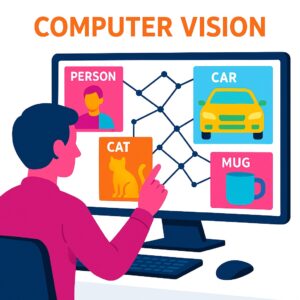

What a Computer Vision Engineer Does

Geo-ICT Training Center, Nederland - Computer Vision EngineerAs a Computer Vision Engineer, you develop applications in which the interpretation of photos, scans, and videos plays a major role. Your responsibilities include the following:

  • Developing and optimizing algorithms for image recognition, object detection, and segmentation.
  • Implementing deep learning models for classifying and analyzing visual data.
  • Integrating computer vision solutions into existing software and hardware environments.
  • Collaborating with data scientists, software developers, and domain experts to integrate visual models into practical applications.
  • Conducting tests and validations to ensure the accuracy and reliability of systems.
  • Documenting developed systems, including technical specifications and user manuals.
  • Staying up to date on the latest developments in computer vision and related technologies.

Skills and Knowledge

  • Thorough knowledge of computer vision algorithms and image processing techniques.
  • Experience with programming languages such as Python, C++, and frameworks such as OpenCV, TensorFlow, or PyTorch.
  • Familiarity with machine learning and deep learning concepts.
  • Experience training and optimizing models on large datasets.
  • Knowledge of cloud-based services for deploying AI models (e.g., AWS, Azure, Google Cloud).
  • Strong communication skills and the ability to explain complex technical concepts to non-technical stakeholders.

Why is the work of a Computer Vision Engineer important?

The work of a Computer Vision Engineer is important because it enables machines to interpret and understand visual information—such as photos, videos, or real-time camera footage—in a way similar to human perception. This has a major impact on various sectors and societal developments. Here are some key reasons why the work is essential:

  • Automation of visual tasks
  • Increased safety and precision
  • New possibilities in product development, such as augmented and virtual reality (AR/VR)
  • Scalability and efficiency
  • Contribution to innovation in AI

Computer vision is one of the most active and innovative branches of artificial intelligence. Developments in this field often lead to breakthroughs in other areas of AI and robotics.

How is Computer Vision applied in Geo-ICT?

In Geo-ICT (Geographic Information and Communication Technology), Computer Vision is increasingly being used to automatically analyze visual data from the physical world and translate it into usable geographic information. This leads to faster, more accurate, and scalable solutions in spatial planning, infrastructure, and environmental management. Here are the main applications of Computer Vision in Geo-ICT:

  • Aerial and satellite image analysis
  • 3D modeling and elevation data
  • Infrastructure inspection and monitoring
  • Traffic analysis and mobility
  • Land use and environmental applications
  • Automatic map generation
  • Smart Cities


Informeer & Solliciteer

Want to know more?

Do you have questions about the course content? Or are you unsure whether the course aligns with your learning goals or preferences? Would you prefer an in-house or private course? We’d be happy to help.

Opleiding

To excel as a Computer Vision Engineer in the world of Geo-ICT, a bachelor’s or master’s degree is essential, as well as completing several in-depth courses in Python and Machine Learning, Python OpenCV, and Deep Learning in QGIS

This knowledge is reinforced by the experience gained at the Geo-ICT Training Center in the Netherlands, where you’ll be prepared for secondment to leading organizations. Your expertise in Computer Vision enables you to contribute to projects at municipalities, land registries, engineering firms, and more, where you’ll transform complex data into valuable insights.


Taken

As a Machine Learning Engineer, you play a crucial role in the world of geoinformation. Your responsibilities are diverse and of great importance:

  • Collecting and preparing data
  • Developing machine learning models
  • Evaluating and optimizing models
  • Implementing models in production
  • Monitoring and maintaining models
  • Collaborating with multidisciplinary teams
  • Automating ML workflows (MLOps)

Frequently Asked Questions About the Computer Vision Engineer Position

A Computer Vision Engineer develops systems that enable computers to interpret and understand visual information—such as photos, video footage, or scans. This includes image processing, deep learning models for object detection and segmentation, and the integration of these solutions into practical applications.

This role is important because visual data is increasingly being used for automation, inspection, monitoring, and intelligent systems. Through your work, an organization can convert large amounts of image or video data into insights, make decisions faster, and operate more efficiently.

Geo-ICT focuses on combining computer vision with geoinformation: you use visual data (such as aerial or satellite imagery) and use computer vision techniques to translate this into geodata-driven insights—for example, for infrastructure, the environment, and smart cities.

Key skills include:

  • In-depth knowledge of computer vision algorithms (image recognition, segmentation, pattern recognition) and image processing techniques.
  • Experience with programming languages such as Python or C++, and frameworks such as OpenCV, TensorFlow, or PyTorch.
  • Familiarity with machine learning, deep learning, and potentially cloud platforms for implementation.
  • Analytical skills and strong communication skills to explain technical concepts to non-technical stakeholders.

A typical workday might look like this:

  1. Preparing visual datasets (photos, videos, scans) for model training or analysis.
  2. Developing or adapting deep learning models for tasks such as object detection or segmentation.
  3. Testing and validating models, monitoring performance, and fine-tuning.
  4. Integrating vision solutions into applications or systems, whether or not linked to geospatial data.
  5. Consulting with fellow data scientists, software developers, or domain experts on potential applications.

Yes, Geo-ICT offers programs that will train you for this role. Not sure if this is the right fit for you yet, but interested in working in the Geo-ICT sector? Then our Geo-ICT Traineeship might be just what you’re looking for!

You can advance to roles such as Lead Computer Vision Engineer, AI/Geo-Vision Architect, or Geo-AI Specialist. Gaining additional expertise in MLOps (model deployment), cloud architecture, or geoinformation technology will enhance your career prospects.

Although the core of the work involves visualization techniques, knowledge of geoinformation (such as GPS location analysis and GIS/geodatabases) will give you a significant advantage in this role at Geo-ICT. This will allow you to link visual data to geographical context, making the results more impactful.

This role is subject to quality standards regarding model quality (accuracy, reliability), data governance (metadata, traceability), and the ethical use of visual data. Safety in the use of images (privacy) and documentation of the algorithms used are also important.

You can apply directly for the Geo-ICT Traineeship position or contact us via the widget on the page by entering your name, email address, and phone number to schedule a no-obligation conversation. You can also send us a WhatsApp message. If you have any questions about the job description or whether the position is a good fit for you, please feel free to contact us.